What Changes With the Season
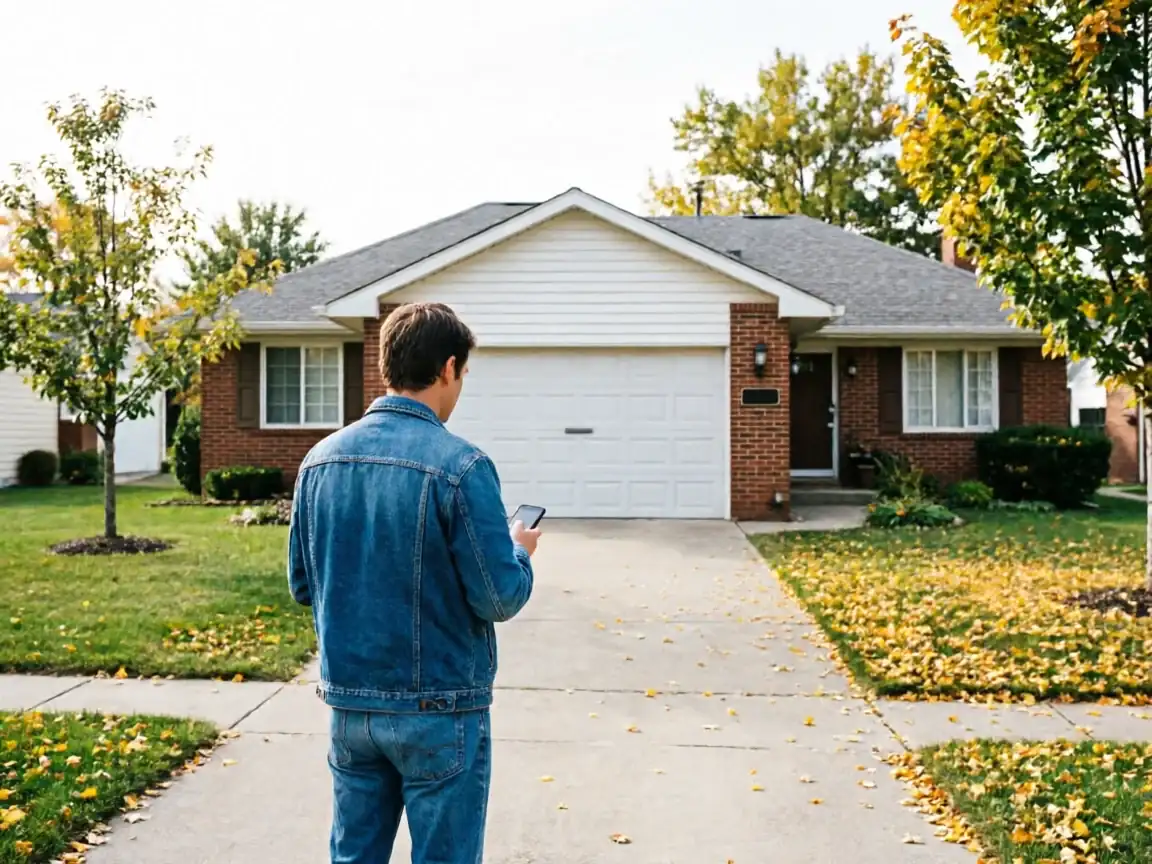
Most houses in this part of town went up between 1947 and 2011, with the median landing around 1969. That puts a big share of the garage doors we see on openers that are original to homes built in the 1960s and 70s, or on a second-generation unit installed sometime in the 80s or 90s. Those chain-drive motors were never built with battery backup in mind, because nobody was thinking about smart-home power loss when they went in.
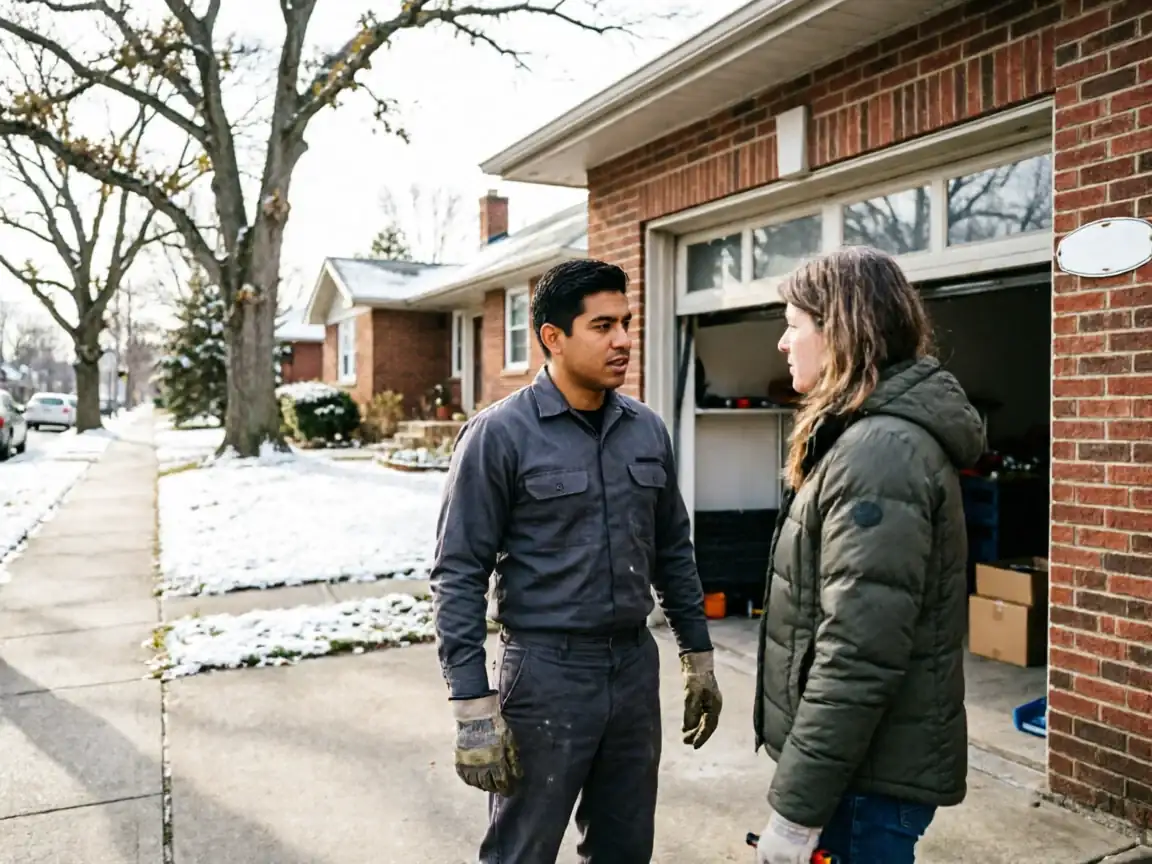
Ballwin sits in a cold-moderate climate band, which means winter brings ice storms and the kind of cold front that trips breakers and drops lines across the metro. When that happens in July it's an inconvenience. When it happens in January with a car in the garage and a door that won't budge, it's a different kind of problem. The season doesn't change what the opener does. It changes how much it matters when the opener stops doing it.
Summer heat swells wood jambs and can bind an old track just enough to strain a motor that was already working harder than it should. Winter cold does the opposite - it stiffens grease, shrinks metal, and makes a tired opener skip a beat right when the power is also most likely to go out.
The Situation
Across the area, most of the stock is 1960s-70s construction
With newer infill mixed in up through 2011. That means two very different generations of opener hardware sitting a few driveways apart. The older units run on a pull cord and a manual release lever that a lot of owners have never actually tested. The newer ones, especially anything installed in the last decade, usually have some kind of battery backup built in - but only if someone paid for that option at purchase.
With 115,641 owner-occupied houses across the service area
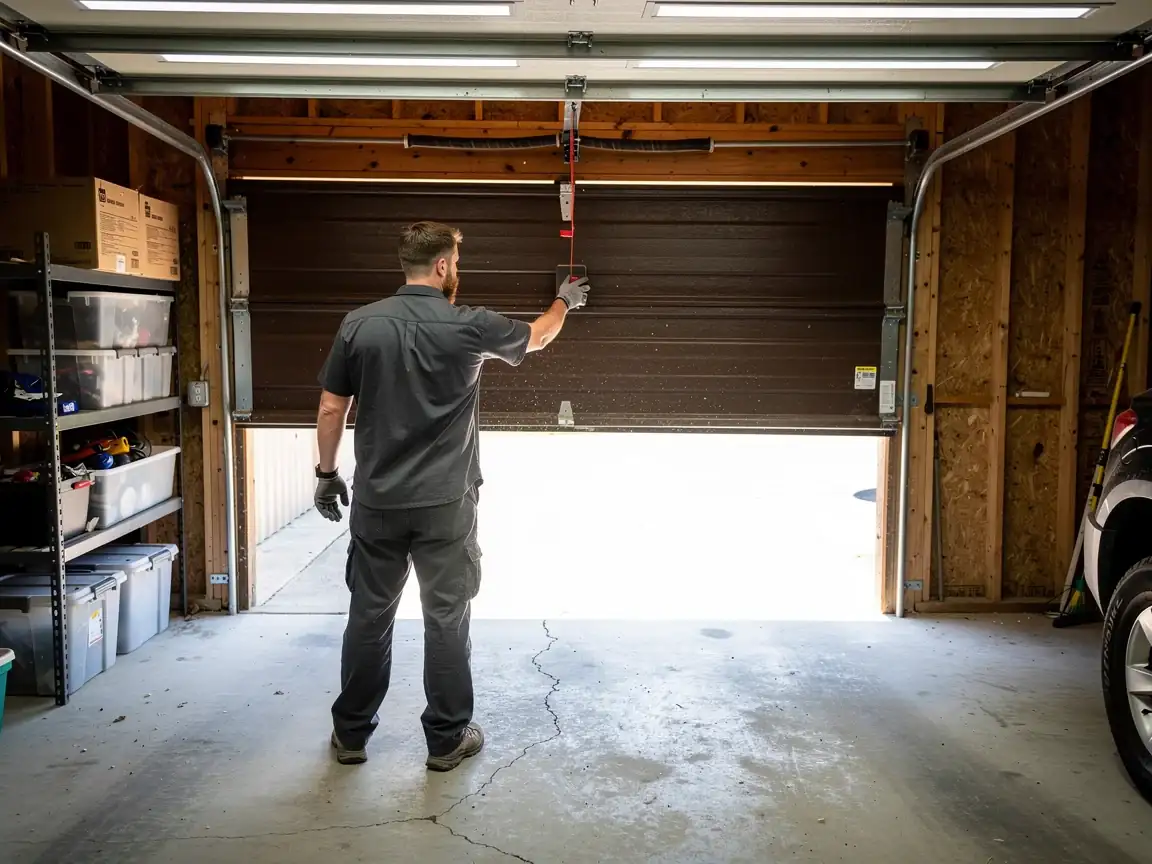
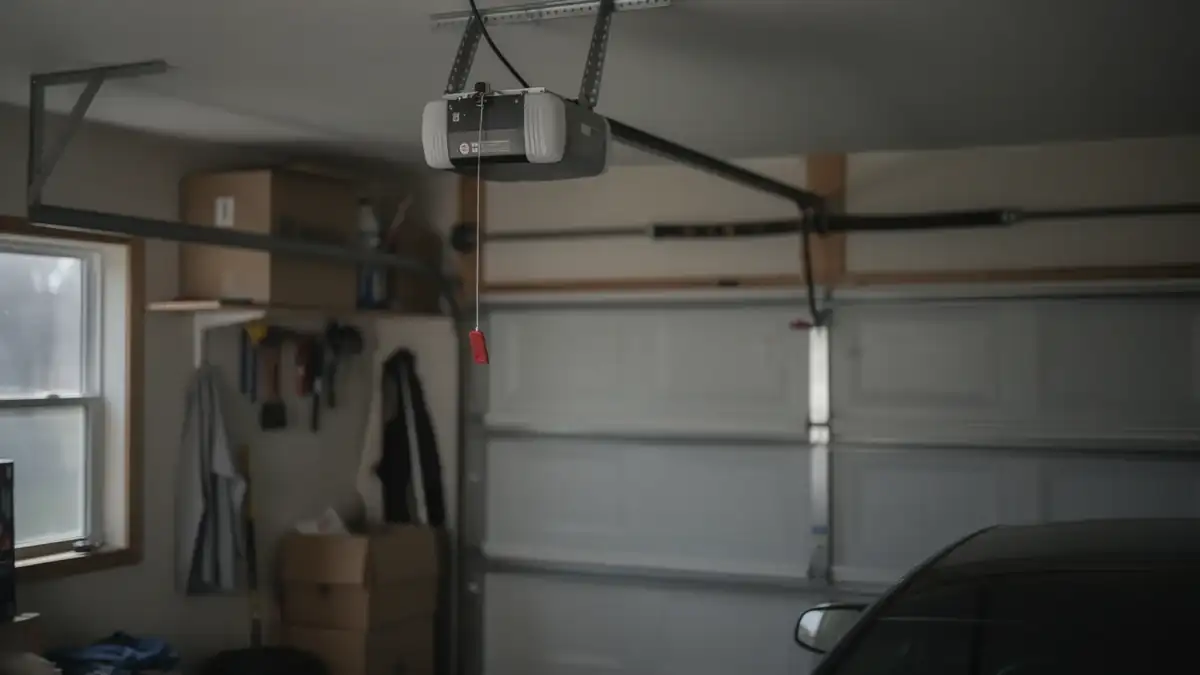
Most built in that same mid-century stretch, the manual release cord on an old chain-drive opener is often the only thing standing between a homeowner and a car stuck inside during an outage. A lot of people don't know the cord is there until the power's already out and they're standing in the dark trying to find it.
- 115,641 owner-occupied
We don't carry a fix for every opener era on every truck
Some parts for units from the 60s and 70s are long discontinued, and when that's the case, replacement is the honest answer, not a repair quote that pretends otherwise.
When to Get Help
If your opener is original to a house from that 1947-2011 window and you've never located or tested the manual release, that's worth doing before a storm takes the power out, not during one. A cord that's stiff, frayed, or missing its handle is a sign the release hardware has aged along with everything else in the unit.
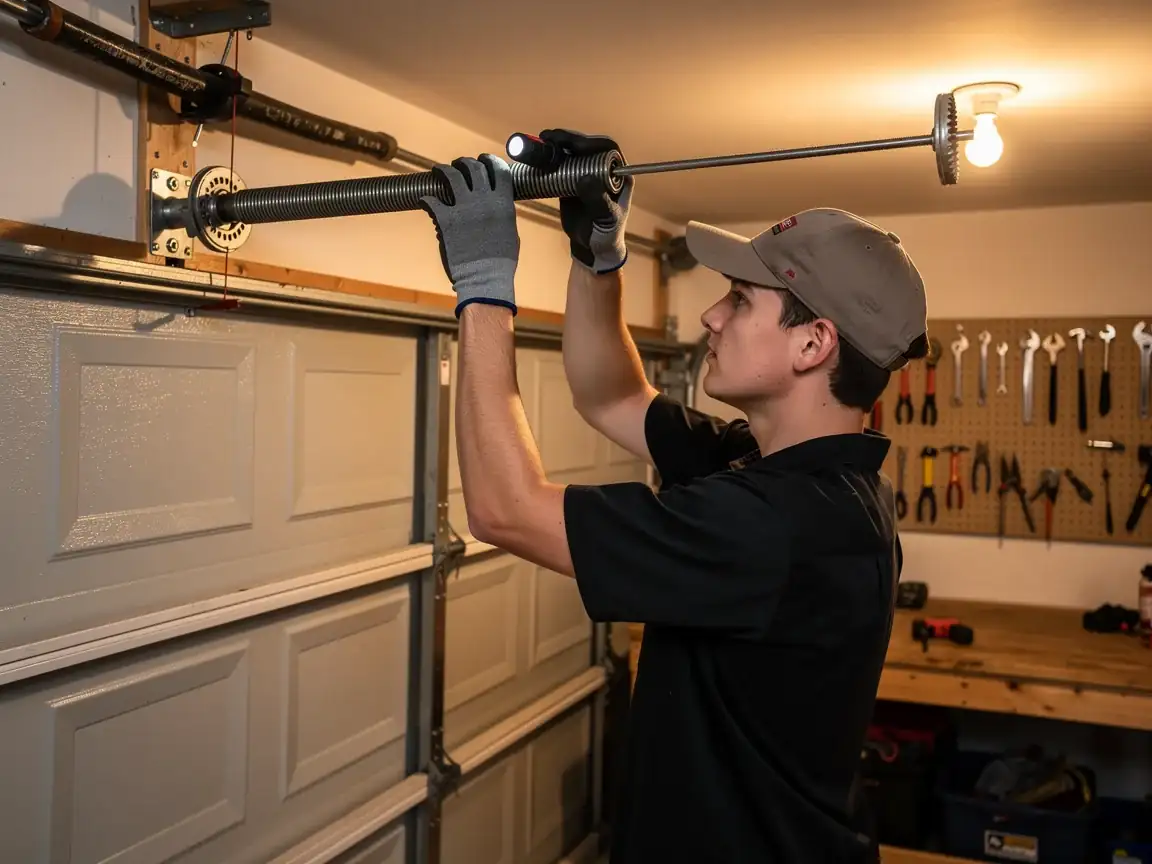
Call when the opener runs but the door doesn't move - that's usually a worn gear or a slipping chain, not the motor itself, and it's a repair, not a replacement. Call when the opener hums and does nothing - that can be a capacitor or a logic board, and on units from the older end of the housing stock, parts availability decides whether we fix it or swap it.
If you're losing power more than once or twice a winter and you're manually releasing the door every time, that's a sign the opener itself is due for an upgrade to a battery-backup model, not just a repair to keep the old one limping along. Households here report a median income of $87,806, which is part of why most homeowners we see choose that upgrade on replacement rather than running the cord every outage for another decade.
What Local Conditions Do
Cold-moderate winters mean lubricant in older openers thickens and chain tension loosens at a different rate than it would somewhere warmer, which is part of why a unit that ran fine in October can start grinding by January. That's not a defect - it's what the climate band here does to hardware that's been in place since the 1960s-70s building wave.
Power cuts tied to winter weather hit older openers harder because they were built without any backup circuit at all. A newer opener loses convenience during an outage. An older one loses function entirely, and the manual release becomes the only way in or out until power's back.
We don't install or service anything outside a garage door and opener system - no general electrical work, no backup generators. If the outage problem is bigger than the door, that's a different trade's job. What we can do is make sure the door itself doesn't become the second problem on top of the first one.