What Changes With the Season
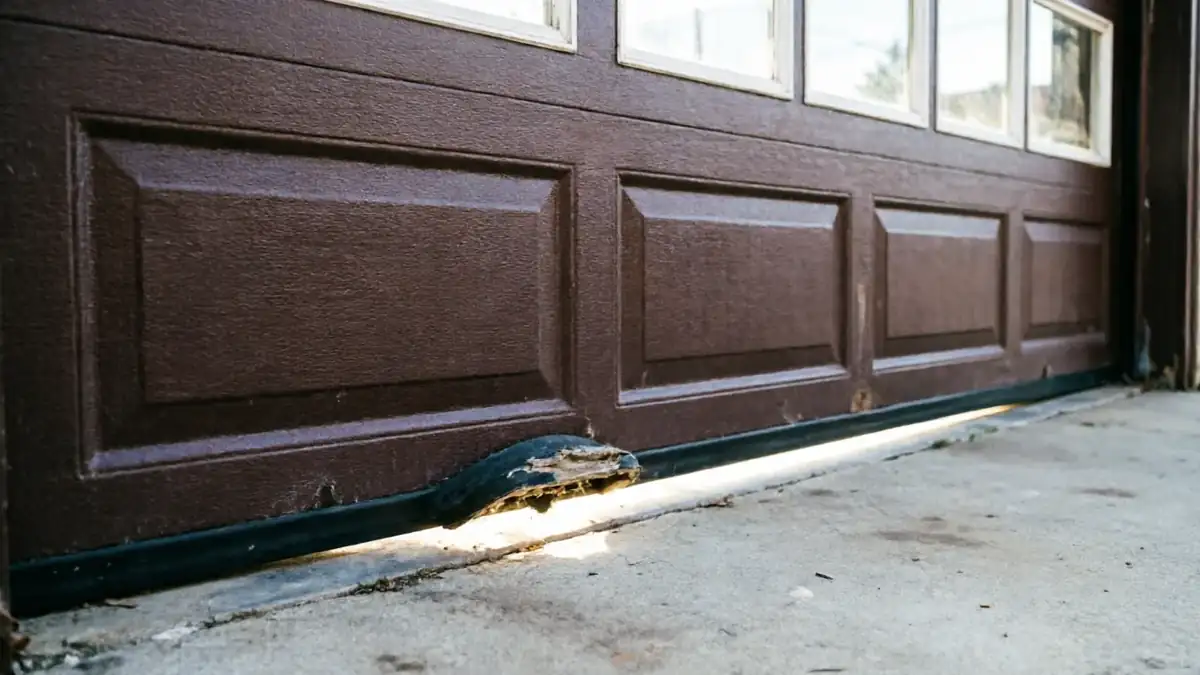
Ballwin sits in a cold-moderate climate band, which means the rubber at the bottom of your door goes through a real freeze-thaw cycle every winter, not just a few cold snaps. That cycling is what kills a seal - not one hard freeze, but dozens of them over a season, each one shrinking the rubber a little more and pulling it away from the slab. On a door installed when the house was built, somewhere between 1947 and the early 2000s going by what's typical on this side of town, that rubber has likely done this fifteen or twenty winters running. You feel it as a draught along the floor, or a thin line of daylight at the corners once the sun's low in the afternoon. Side seals and the top weatherstrip harden the same way, just slower, so a door can look fine shut and still be pulling in outside air where the panel meets the frame. None of this is dramatic. It's slow enough that most owners don't notice until the air coming off the slab is cold enough to feel from the kitchen.
When to Get Help
Call before the cold really sets in if you can see daylight under the door during the day, if the bottom seal is flat or cracked rather than rounded, or if cold air is noticeably pooling near the garage-side door into the house. A seal that's just hardened but still intact is often a straightforward swap. One limitation worth saying plainly: if the track itself is bent or the slab has settled unevenly, which happens on older foundations in this area, a new seal won't seat right no matter how good the rubber is, and that's a track or threshold job, not a seal job. We don't stretch a seal fix to cover a problem that's really in the concrete or the hardware - better to say so up front than sell a $40 fix that fails in a month.
What Local Conditions Do
We work this door across Ellisville, Manchester, Clarkson Valley, Valley Park, and the rest of the towns within a few miles of Ballwin, and the seal failures look the same for the same reason - it's one climate band and largely one era of housing stock across the group of roughly 115,641 owner-occupied houses in the area. A door in Town and Country or Des Peres built the same decade as one in Ballwin wears its seals out on roughly the same clock. What differs house to house is less the town and more the orientation of the garage - a door facing west catches more direct sun and dries the rubber faster, while a north-facing door stays colder and the seal stays stiffer longer into spring. Either way, the fix is the same: match the seal profile to the actual track, not just the door size.