What the Fix Involves
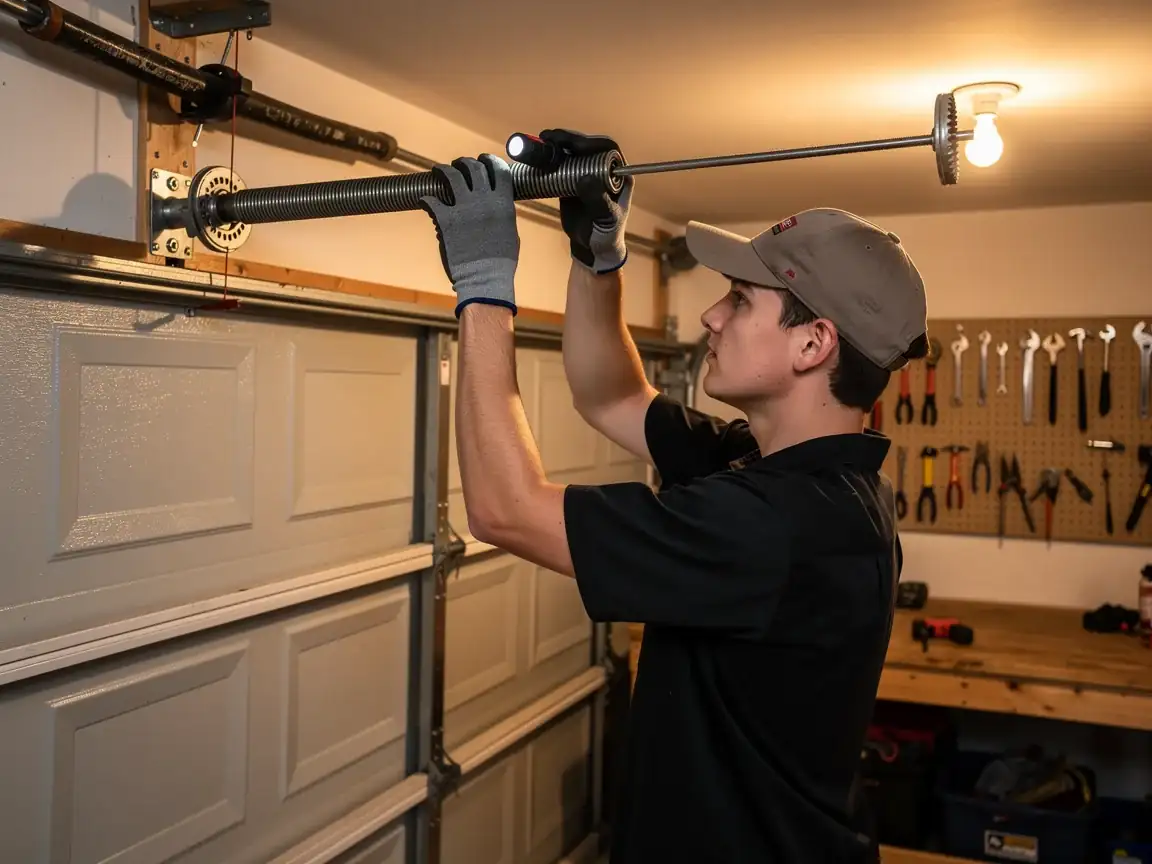
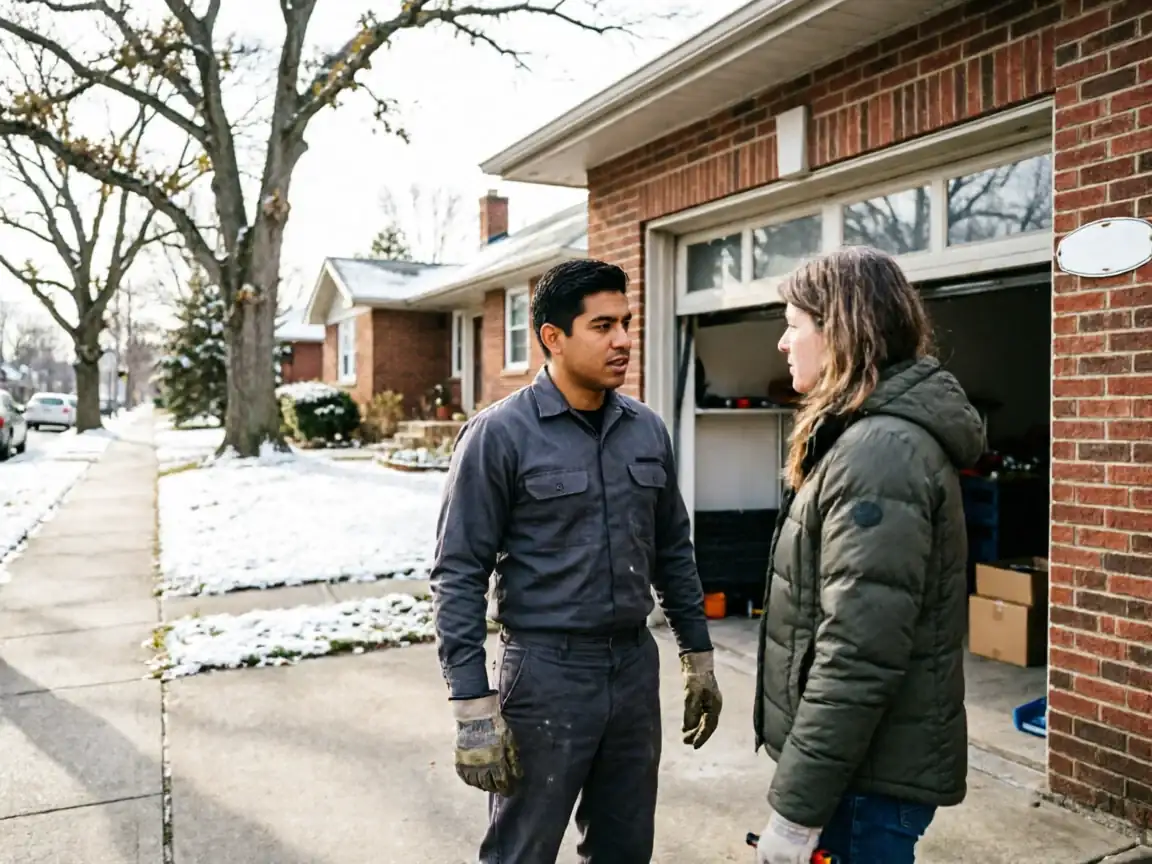
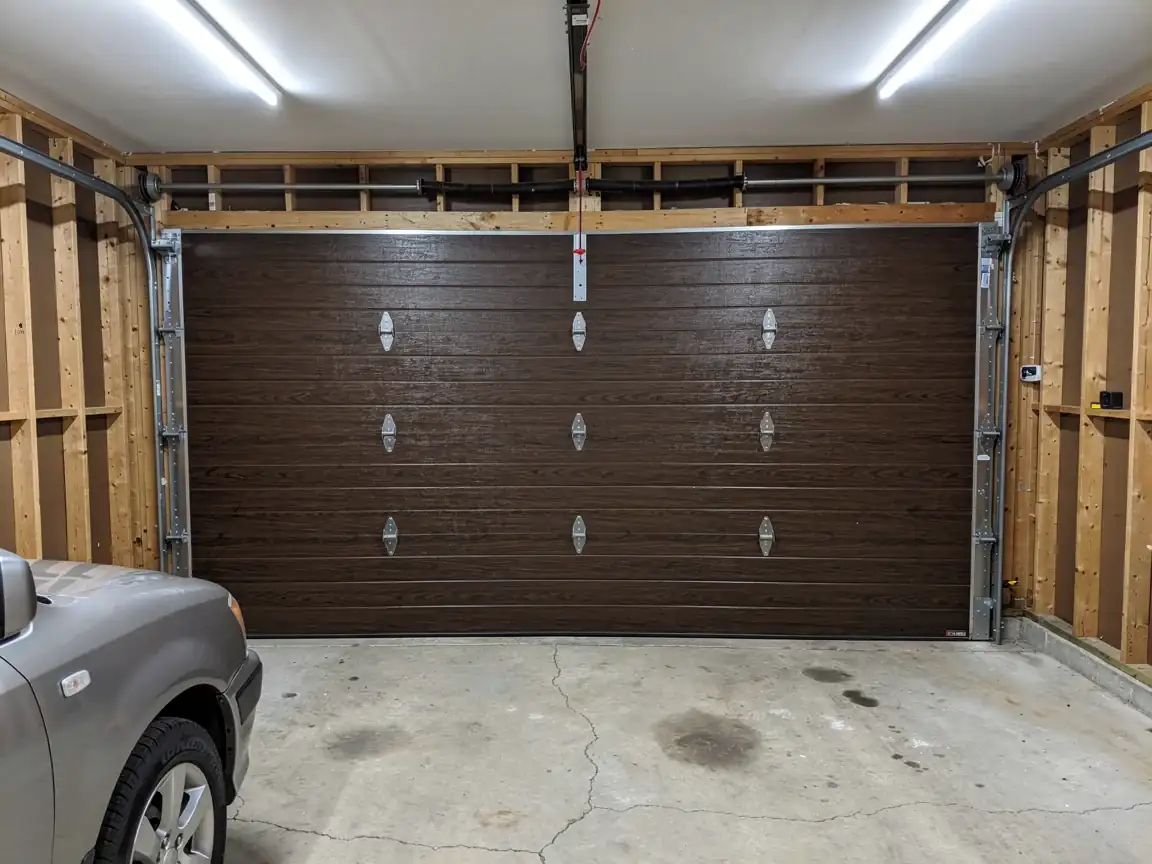
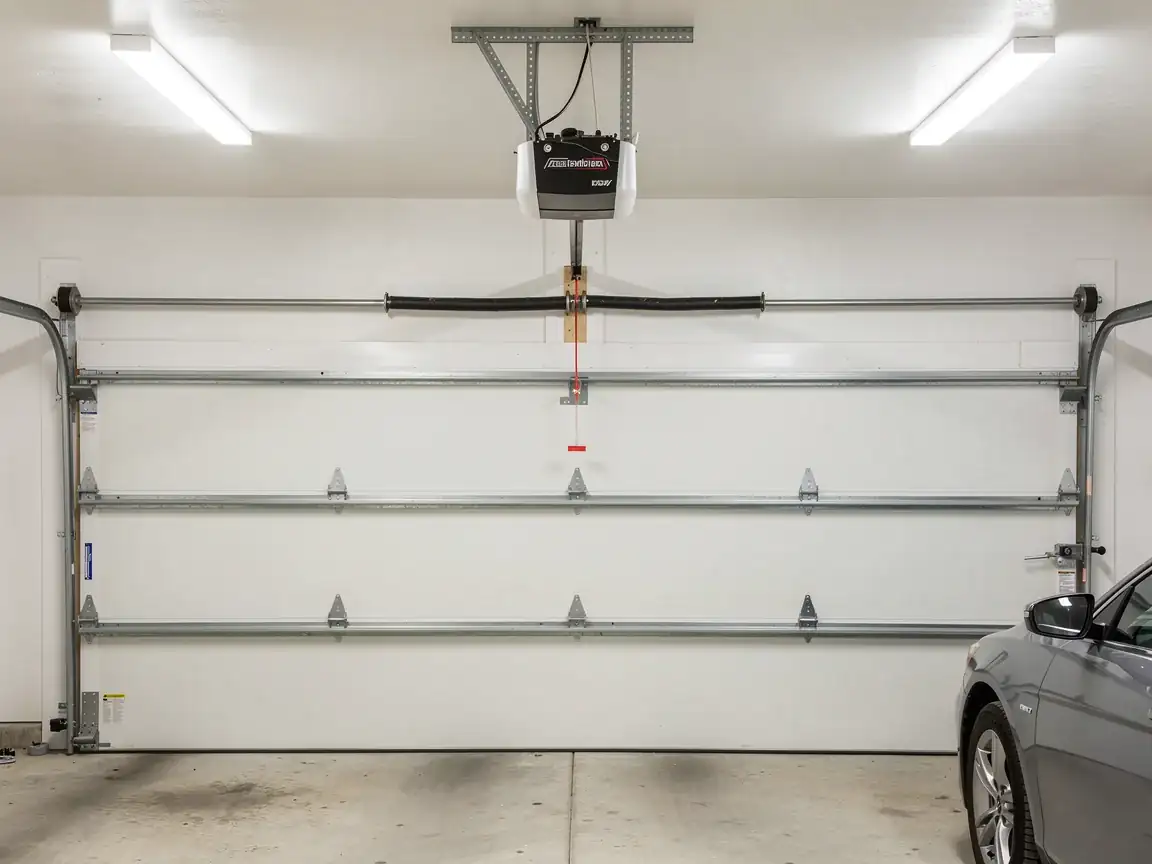
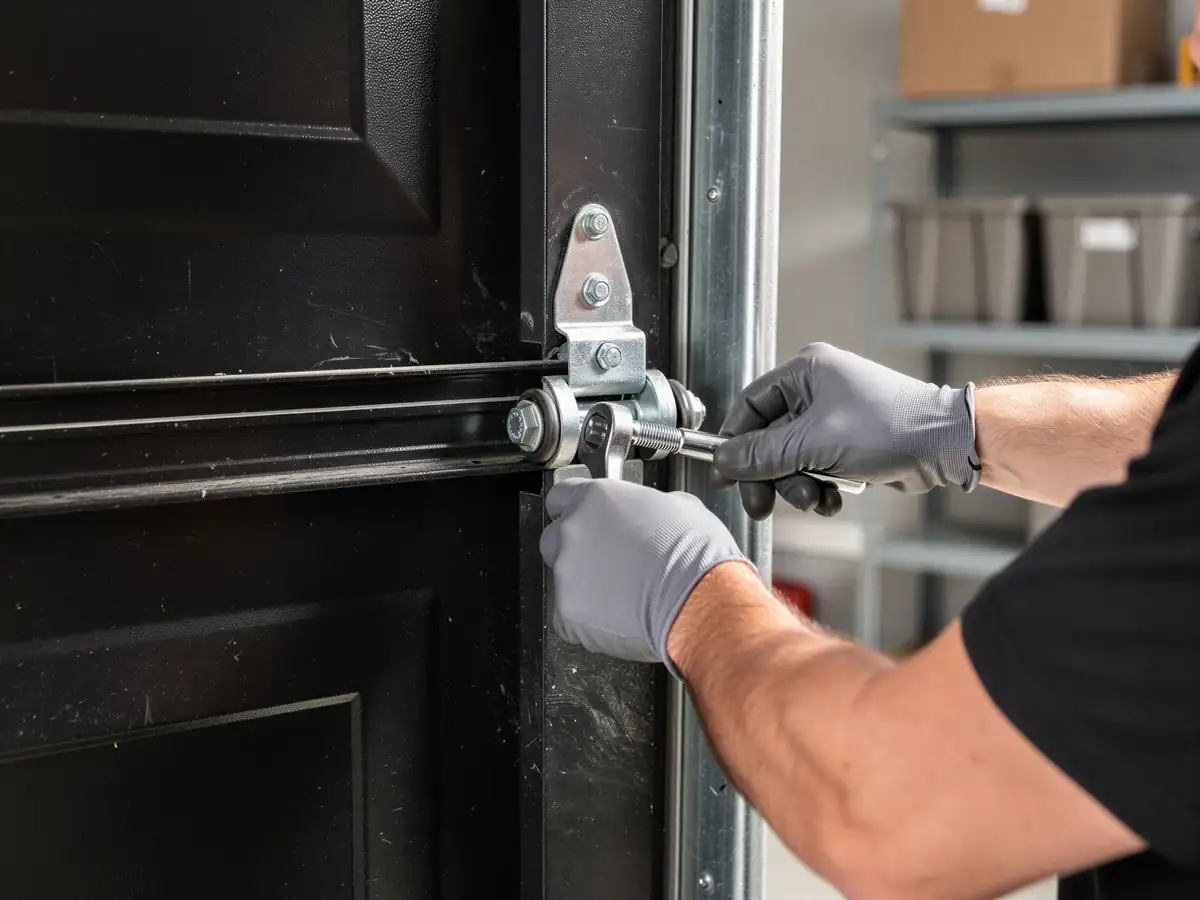
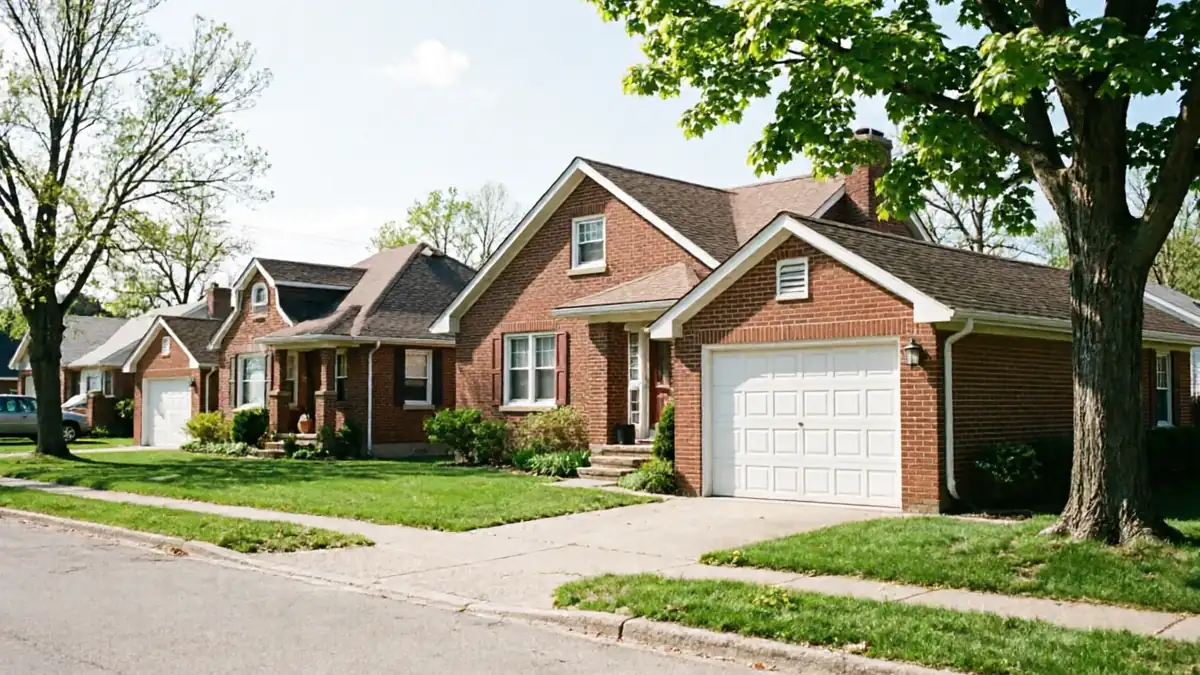
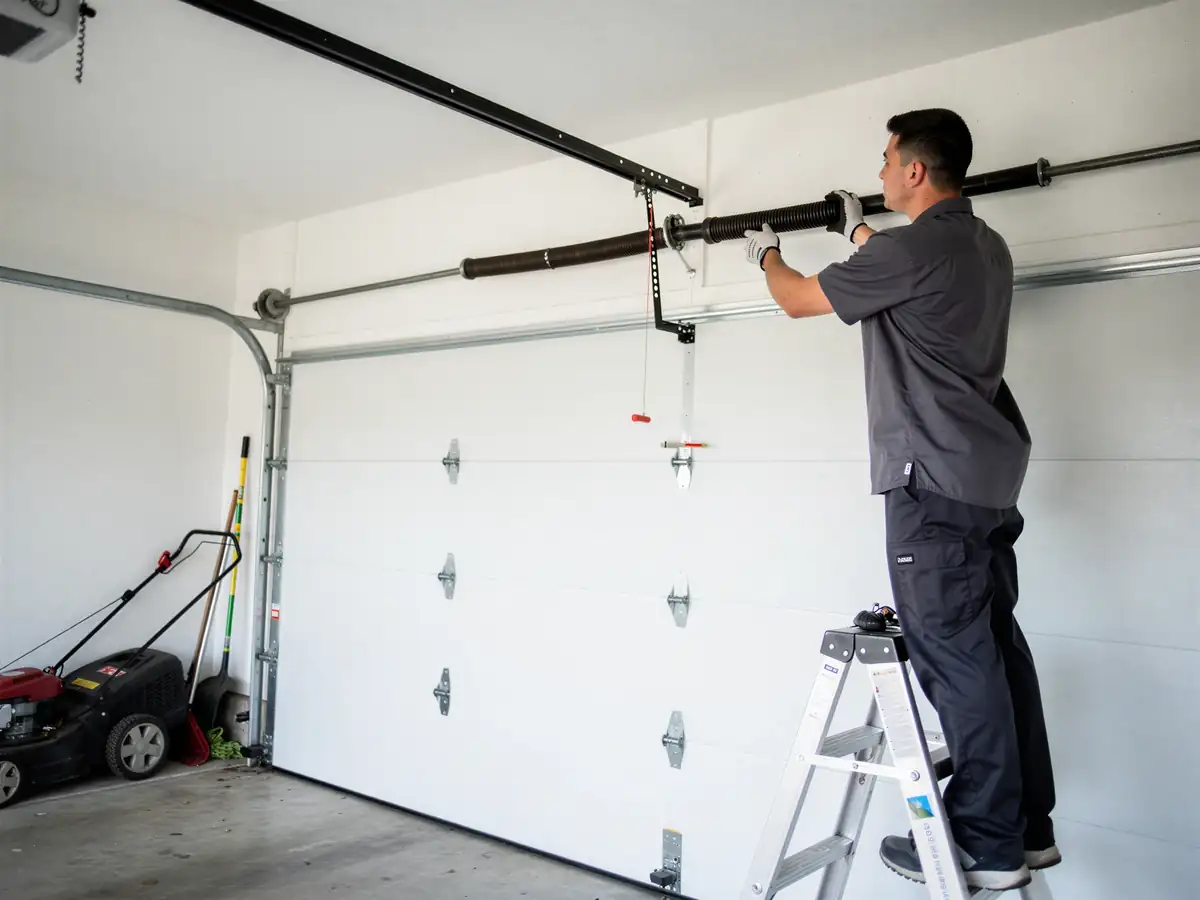
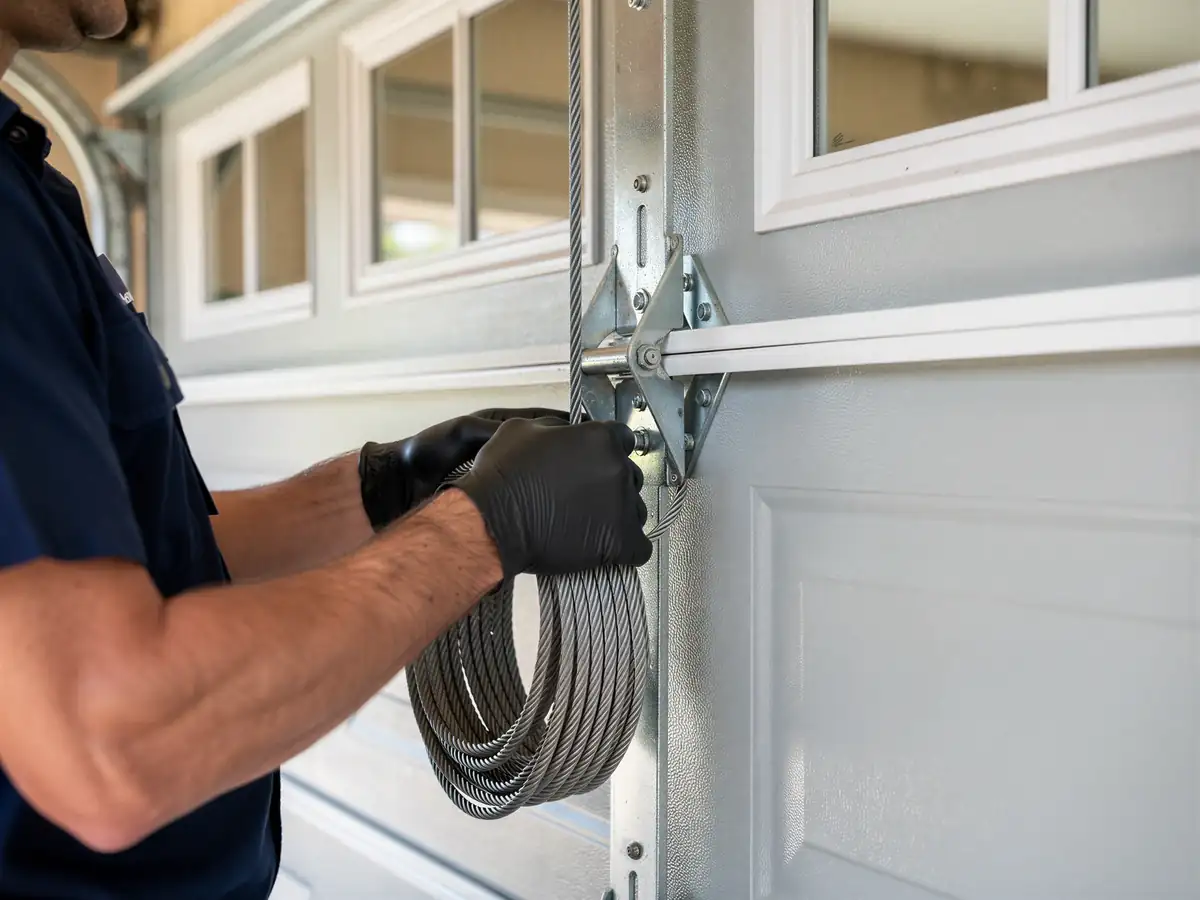
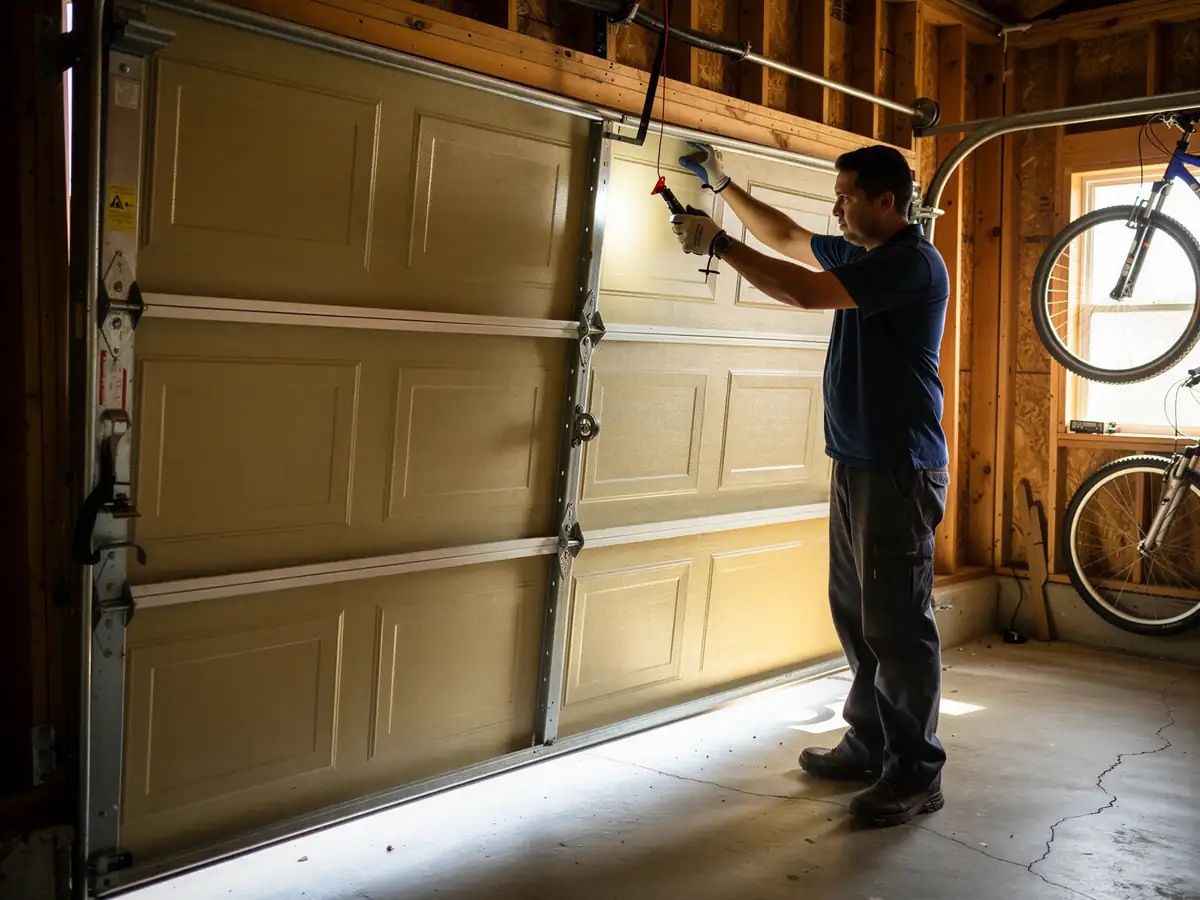
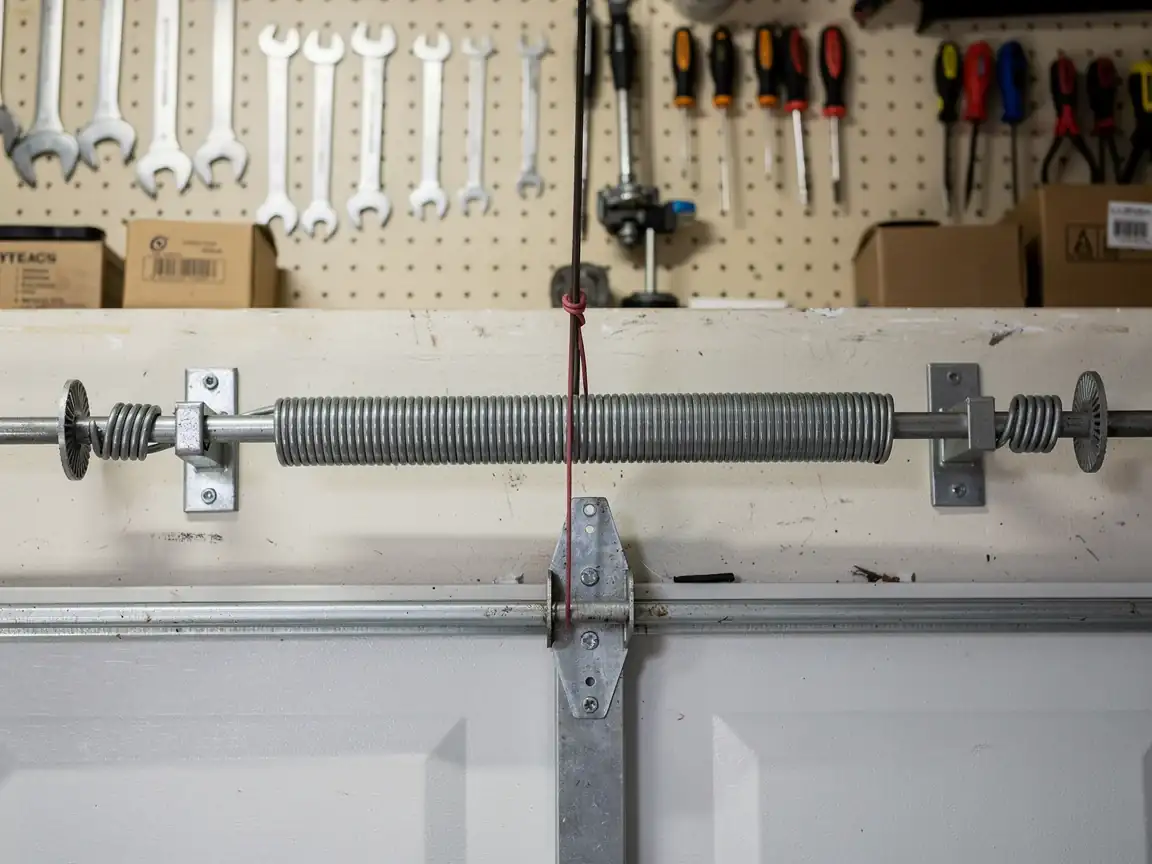
A standard service call here starts with the spring system, because that's what carries the weight of the door and fails first. We check torsion spring wind, cable condition on both sides, and roller travel through the track before we ever touch the opener. On a lot of Ballwin doors that means working with original torsion hardware that's been wound and re-wound for decades - the housing stock runs from 1947 to 2011, with most of it landing in the 1960s and 70s, so the hardware we find is often older than the homeowner standing next to us.
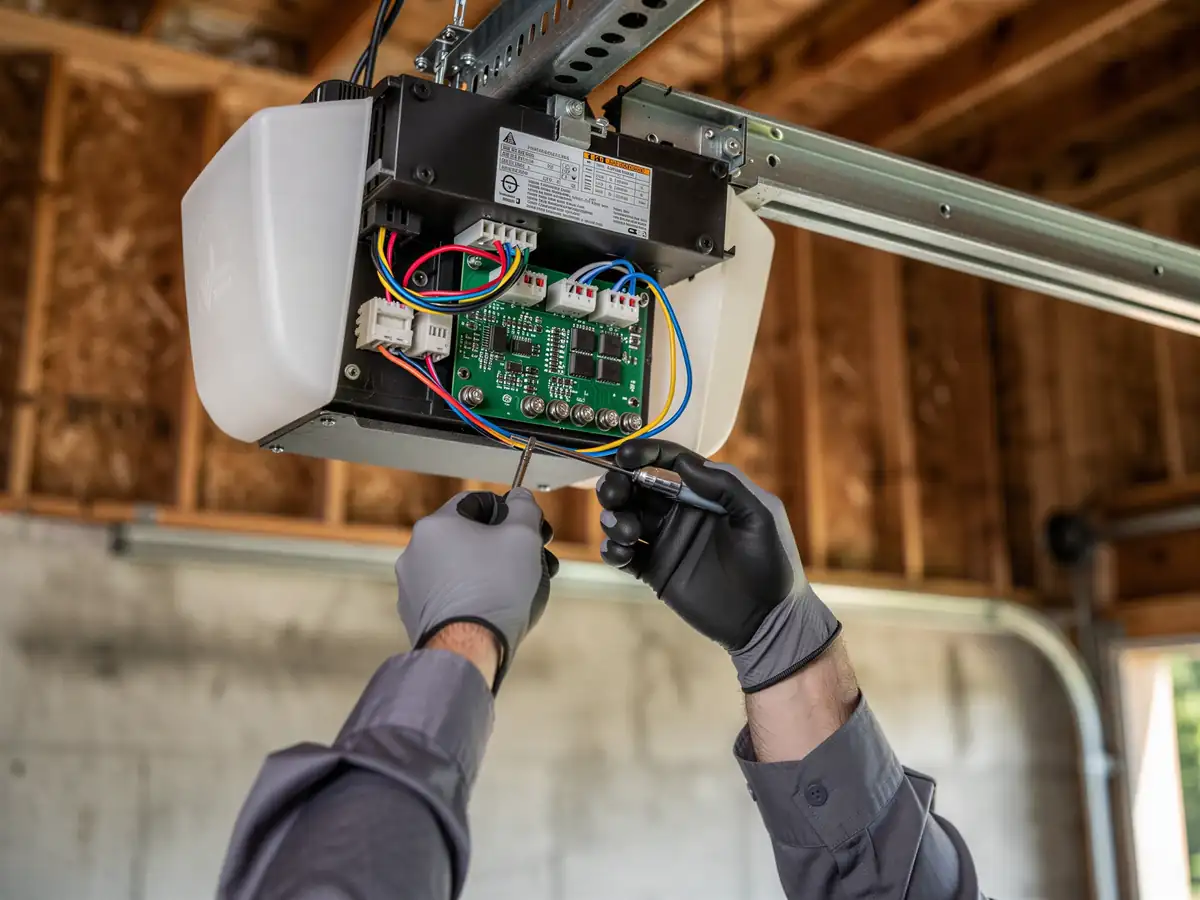
We also inspect the bottom panel and weatherstripping, since cold-moderate winters here work seals harder than owners expect. If a track is bent from a slipped roller, we straighten or replace that section rather than the whole rail. If the opener's logic board is dying but the motor is fine, we say so instead of selling a full unit.
One limit worth naming: if a torsion spring has already snapped and bent the center bearing plate, that's not a spring swap anymore - that's a header repair, and it takes longer and costs more. We'll tell you which one you're looking at before we start, not after.
What It Costs
We don't post a flat number here because two doors with the same symptom can need very different work
A single torsion spring swap on a one-car door is a different job than matching springs on a double door that's out of balance on both sides - and on original 1960s-70s hardware, finding a spring that matches the old wind and wire gauge sometimes takes longer than the repair itself.
What we can tell you is how we price the decision between repair and replace
If the door panel is original steel from that same housing era and the track or hinges are failing alongside the spring, patching one part just moves the next failure a few months down the road. With median household income in this area at $87,806, most owners we talk to would rather pay once for a proper fix - new springs, matched cables, aligned track - than call us back twice in the same year for the parts we didn't touch.
The honest version
If your door is original to a house built in the 1950s or 60s, expect the hardware itself to be a factor in the quote, not just labor. Reproduction parts for that era aren't always off-the-shelf.
What Causes It Around Here
Most of the failures we see trace back to two things: age of the door and the cold-moderate climate swinging through this part of Missouri. Housing in this service area was built between 1947 and 2011, with the bulk going up in the 1960s and 70s, so a torsion spring installed when the house was framed has already outlived several normal service intervals. Steel fatigues with every cycle, and a 50- or 60-year-old spring has gone through a lot of cycles.
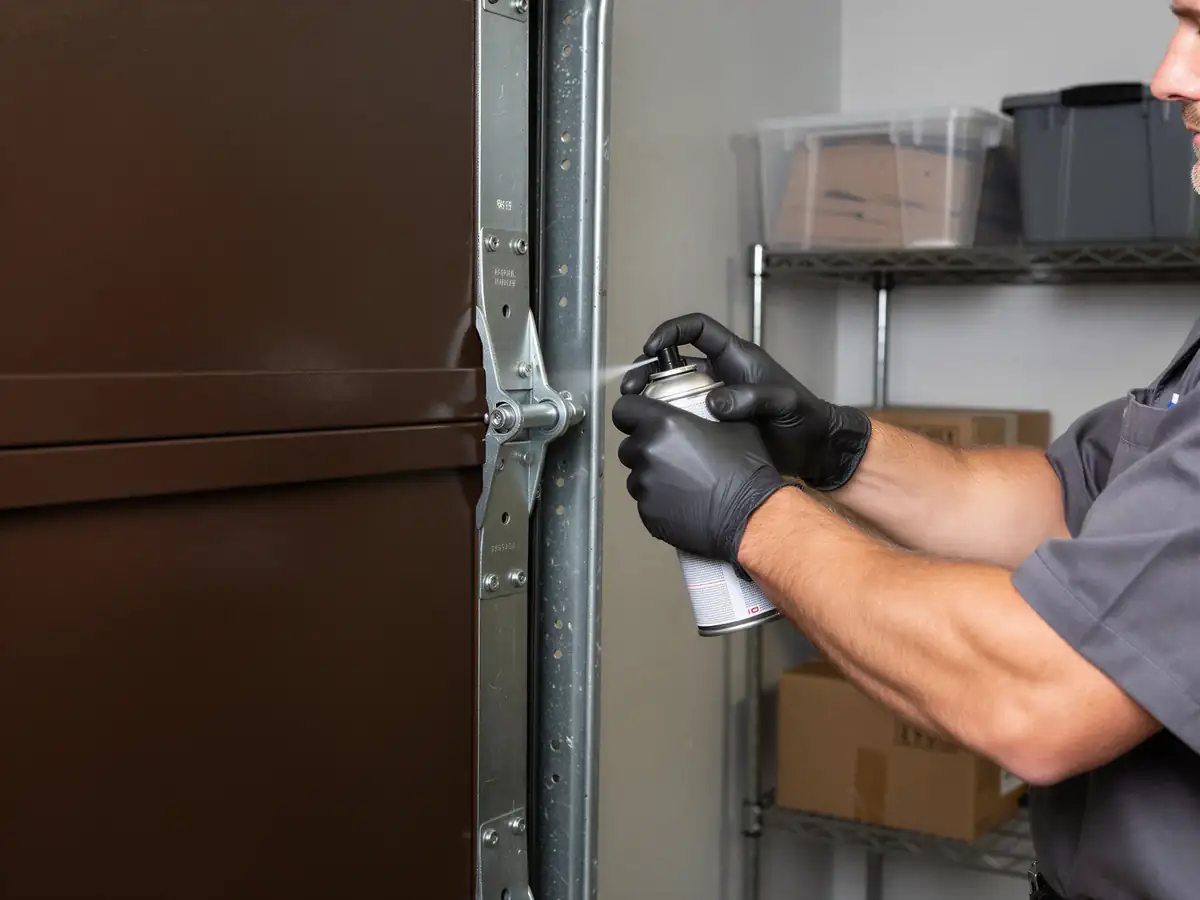
The cold-moderate band adds a second stress. Freeze-thaw swings contract and expand steel track and spring coils, which loosens mounting bolts and stiffens lubricant right when the door is working hardest to seal against the weather. We see this pattern across the roughly 209,210 households and 115,641 owner-occupied houses in this area - it isn't a Ballwin-only quirk, it's what happens to 1960s-and-70s garage door hardware anywhere that gets real winters.
Doors on the original mounting hardware, with no upgrade since construction, are the ones that fail first and hardest once a cold snap hits. That's the pattern we plan service calls around, not a general sense that doors break.
What You Are Seeing
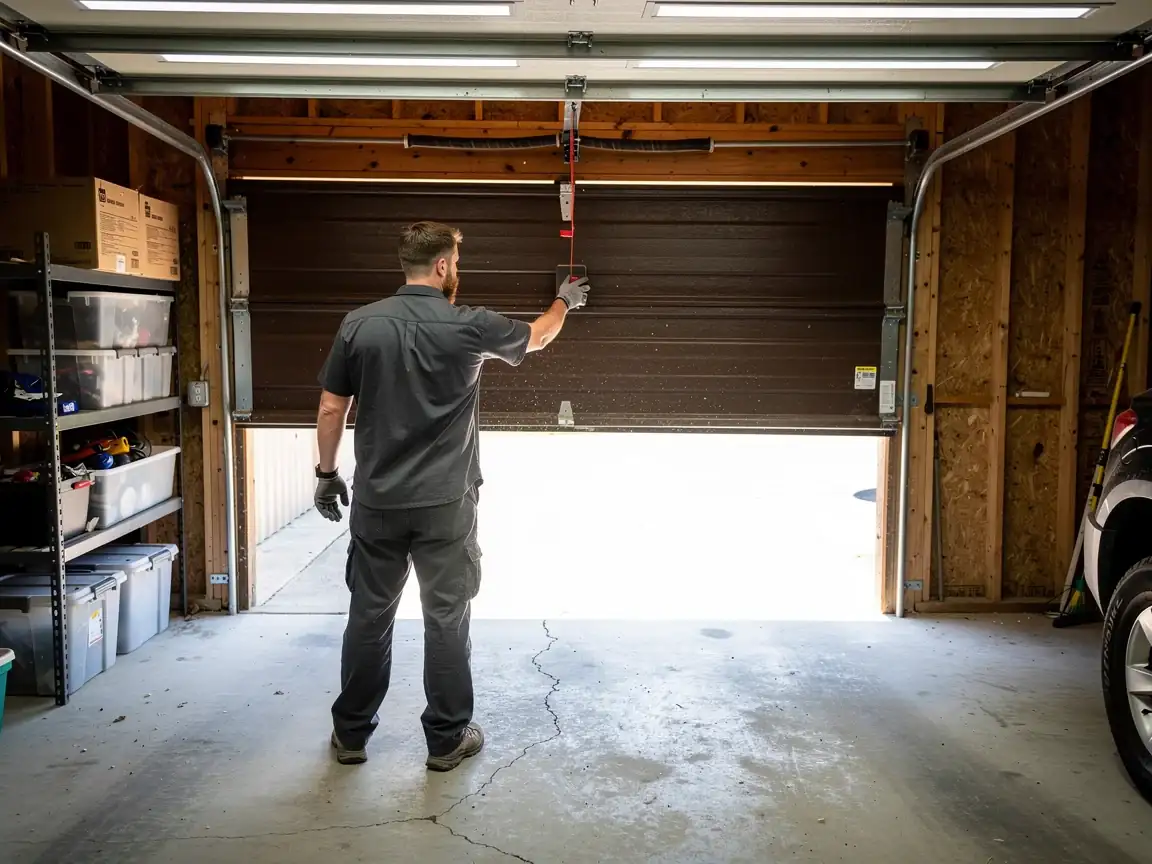
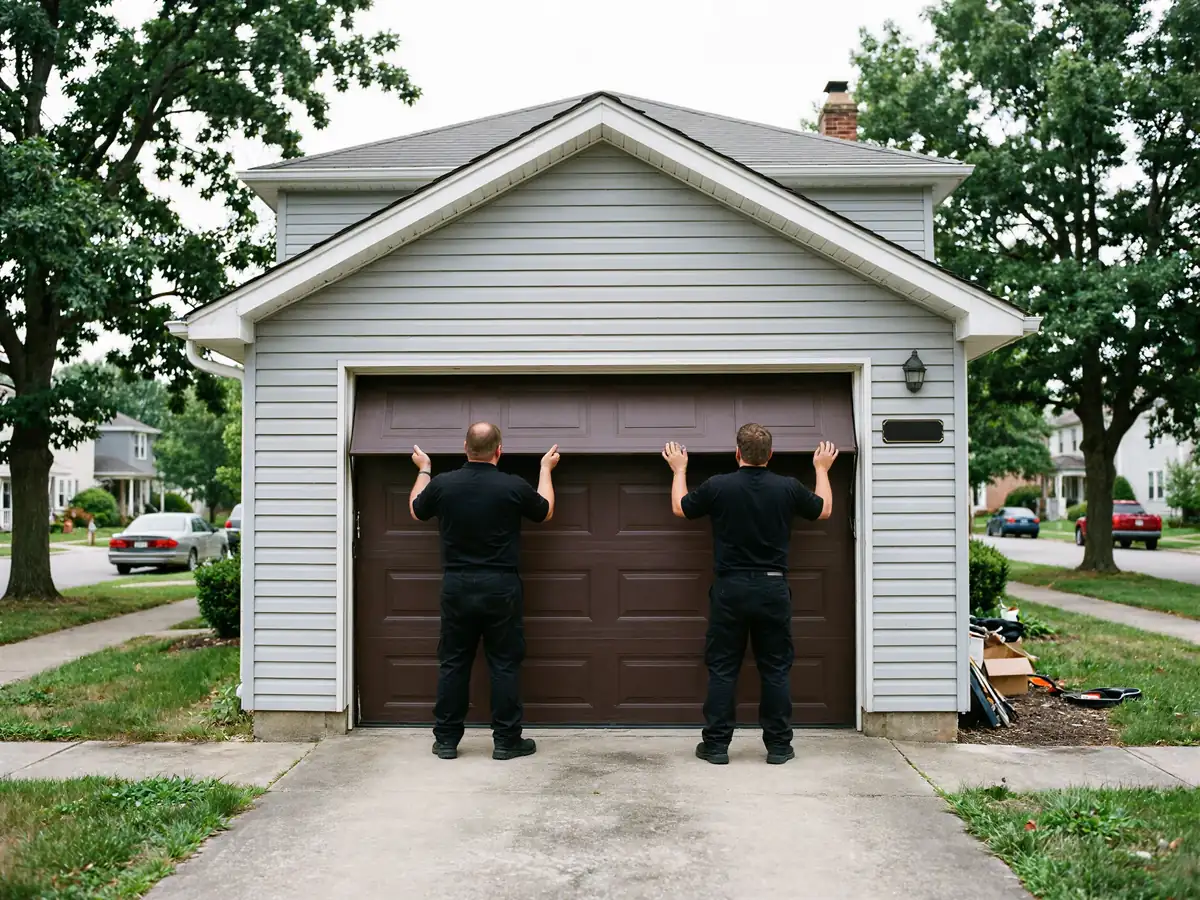
If the door is slow to lift, sags on one side, or the opener strains and reverses partway up, that's usually the spring losing tension rather than the opener failing outright. A loud bang from the garage followed by a door that won't budge is almost always a broken torsion spring - common on houses with original hardware from the 1960s and 70s era that makes up most of the stock here.
A door that shudders or jumps in the track points to a bent rail or a roller that's worn through its bearing, often made worse by cold-weather stiffness in a track that hasn't been serviced in years. If the opener runs but the door doesn't move, check the trolley connection before assuming the motor's dead - that's a five-minute fix, not a replacement.
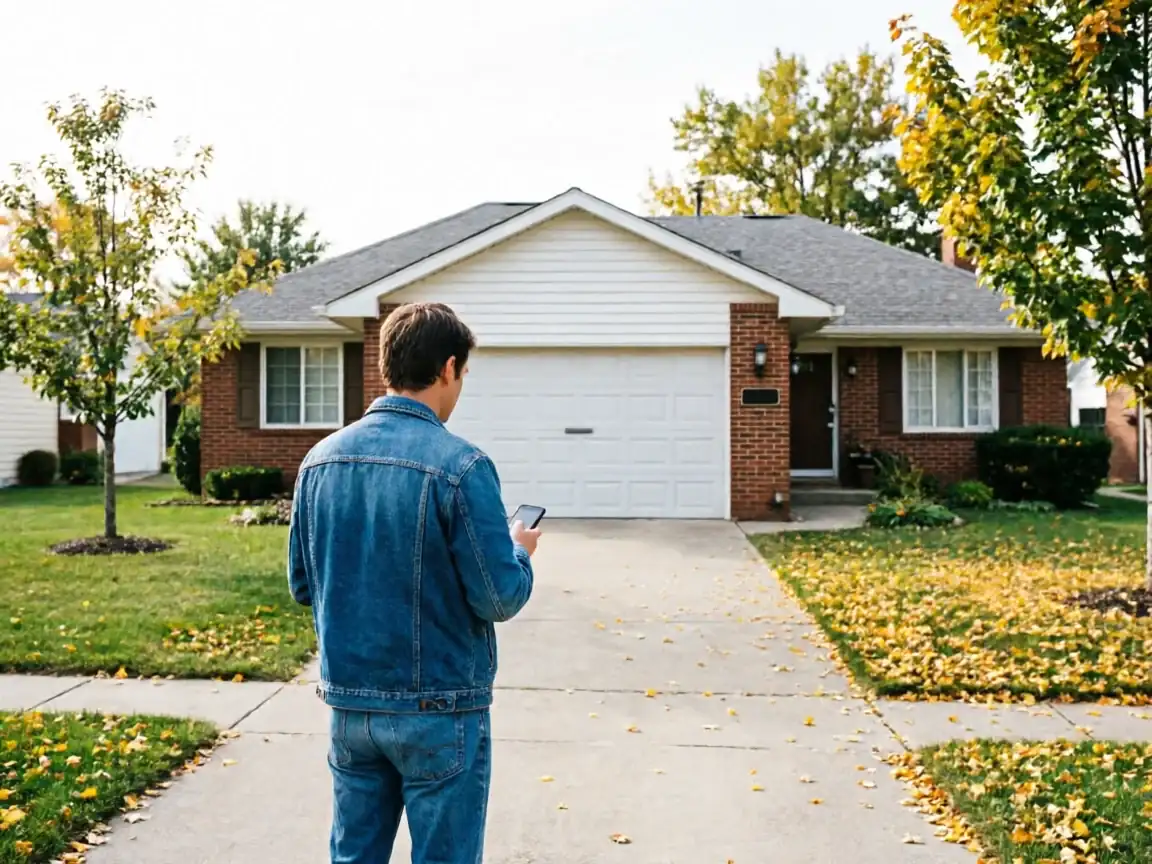
We work this pattern across the area out to Ellisville and Manchester two miles off, Clarkson Valley and Valley Park a bit farther, and out toward Kirkwood, Des Peres, and Creve Coeur - houses built across that same 1947-2011 window, so the symptoms repeat block to block. If you're not sure what you're looking at, describe the sound and the stall point on the phone and we can usually narrow it down before the truck even rolls.