What It Costs
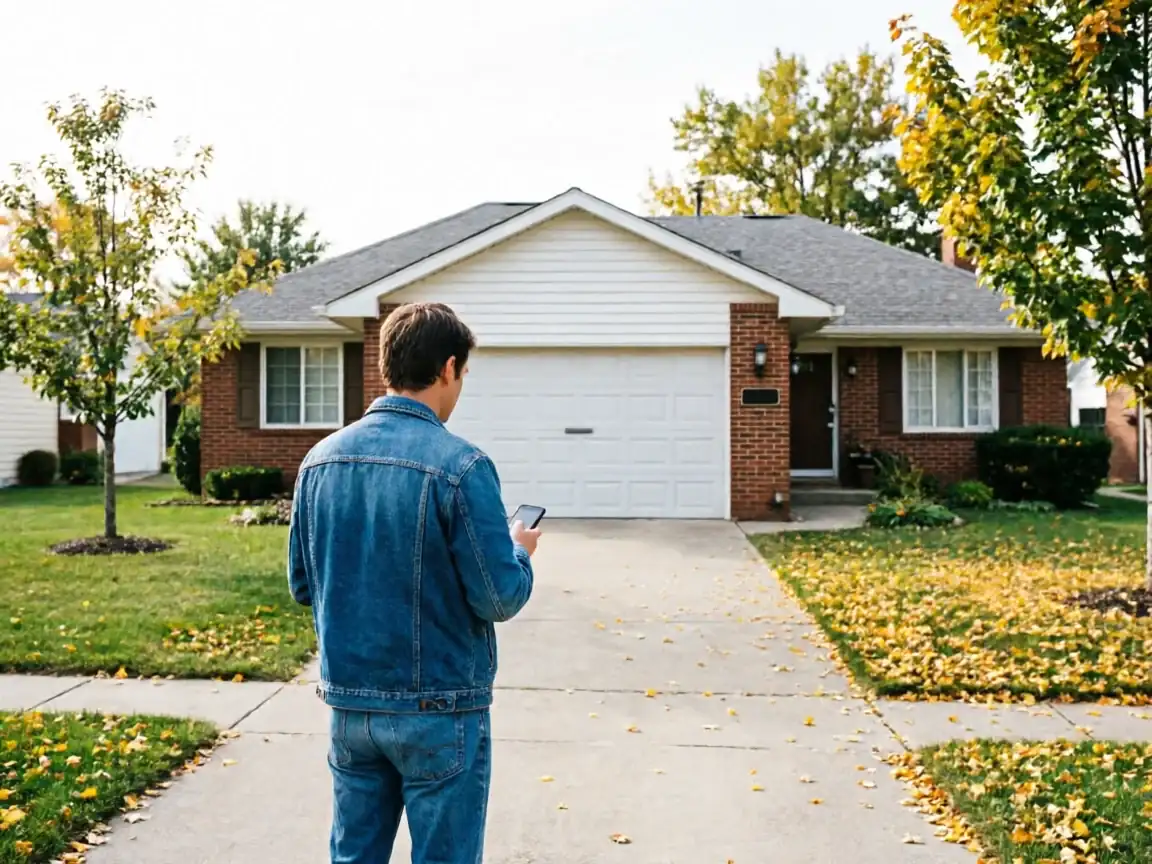
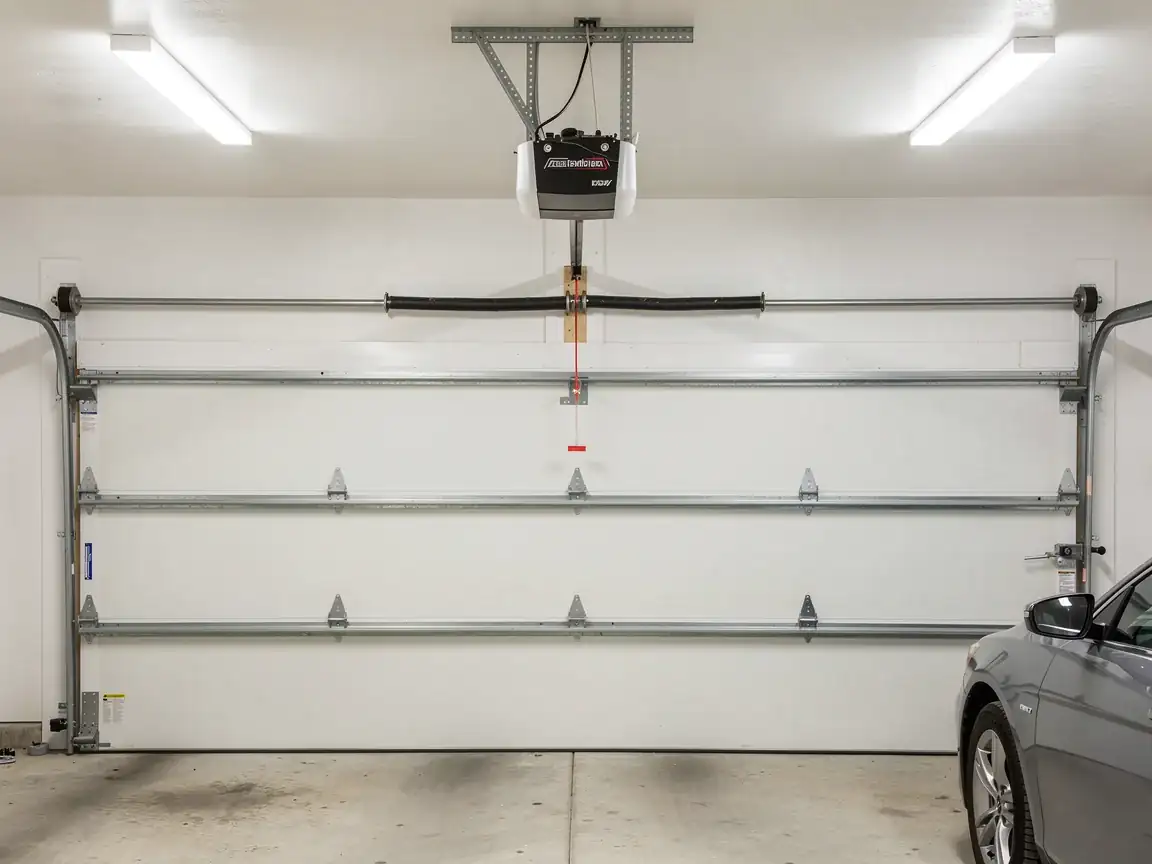
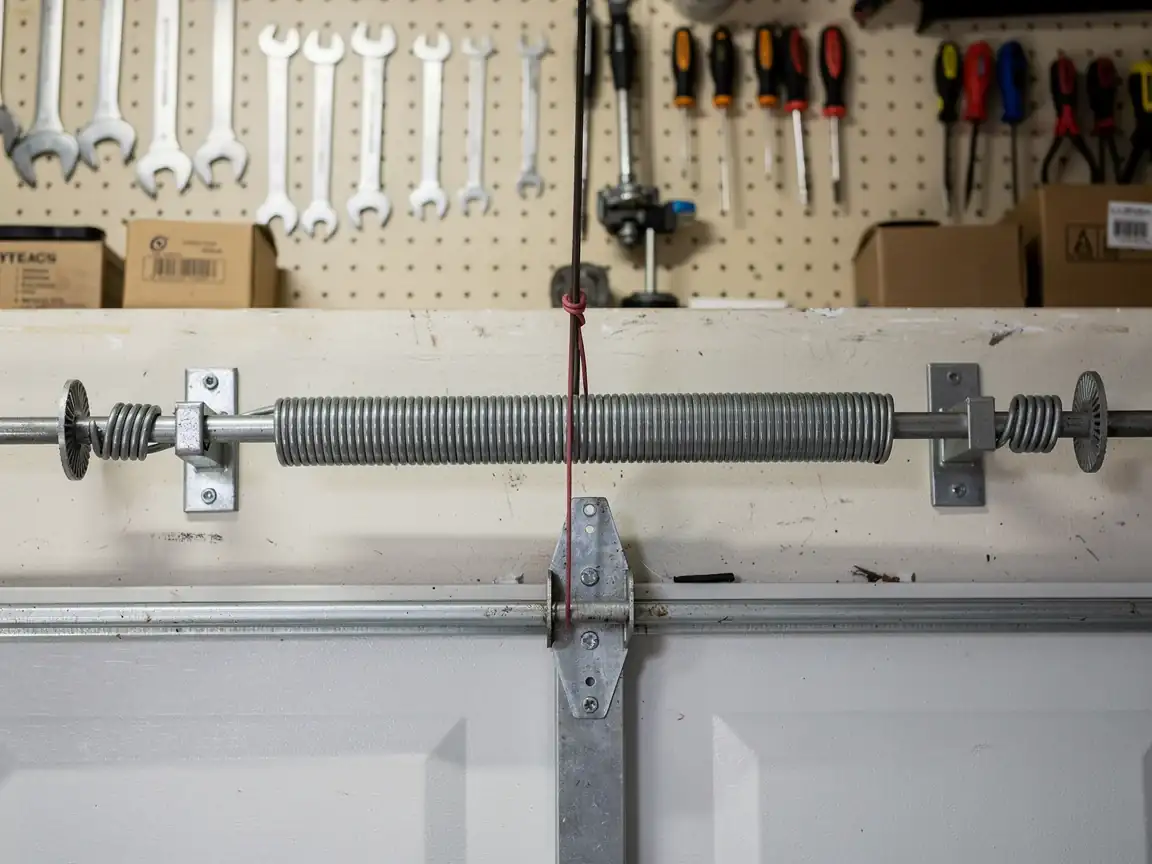
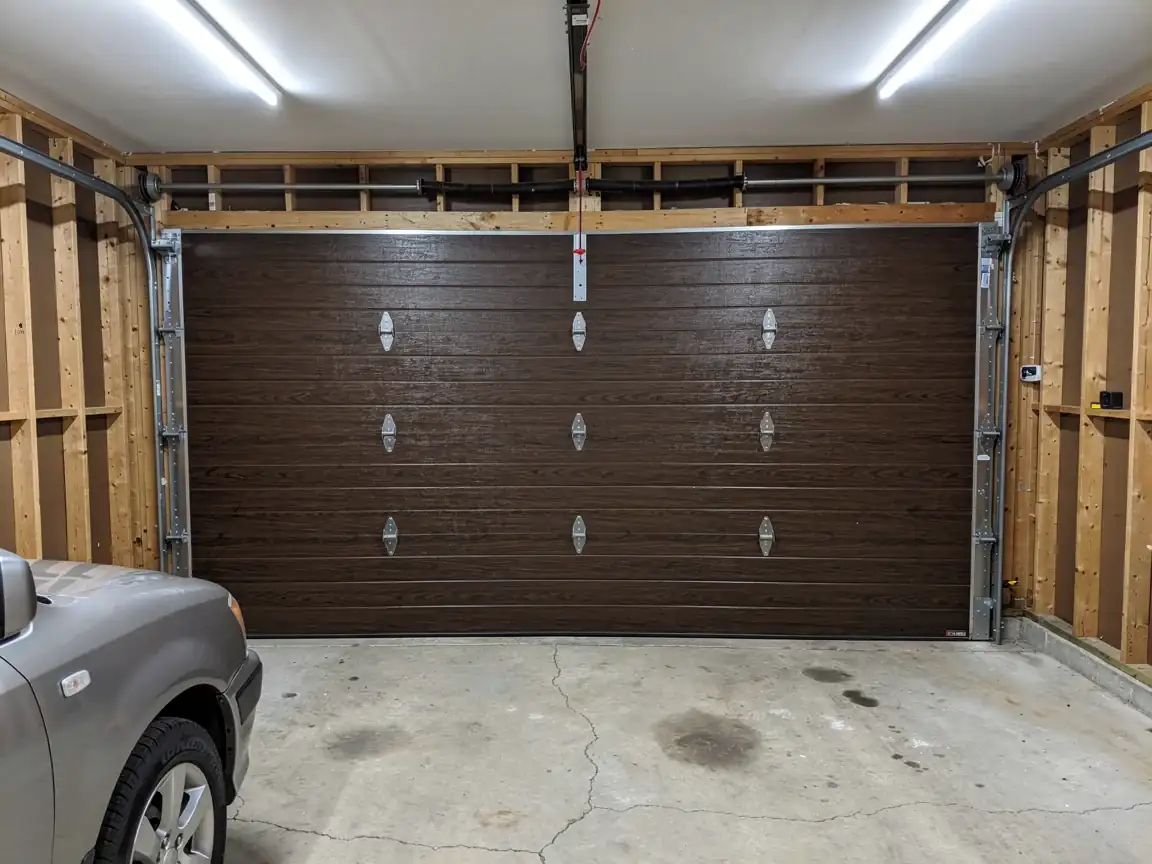
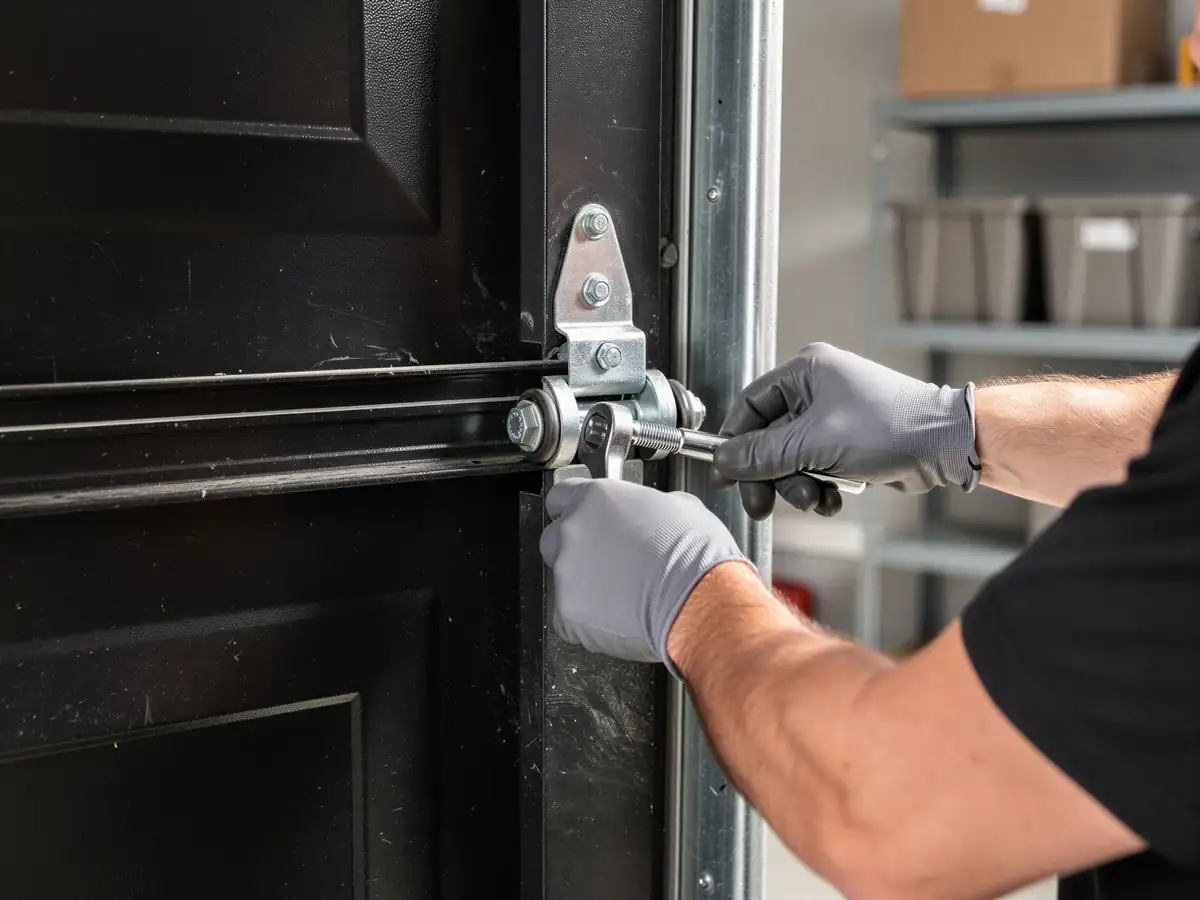
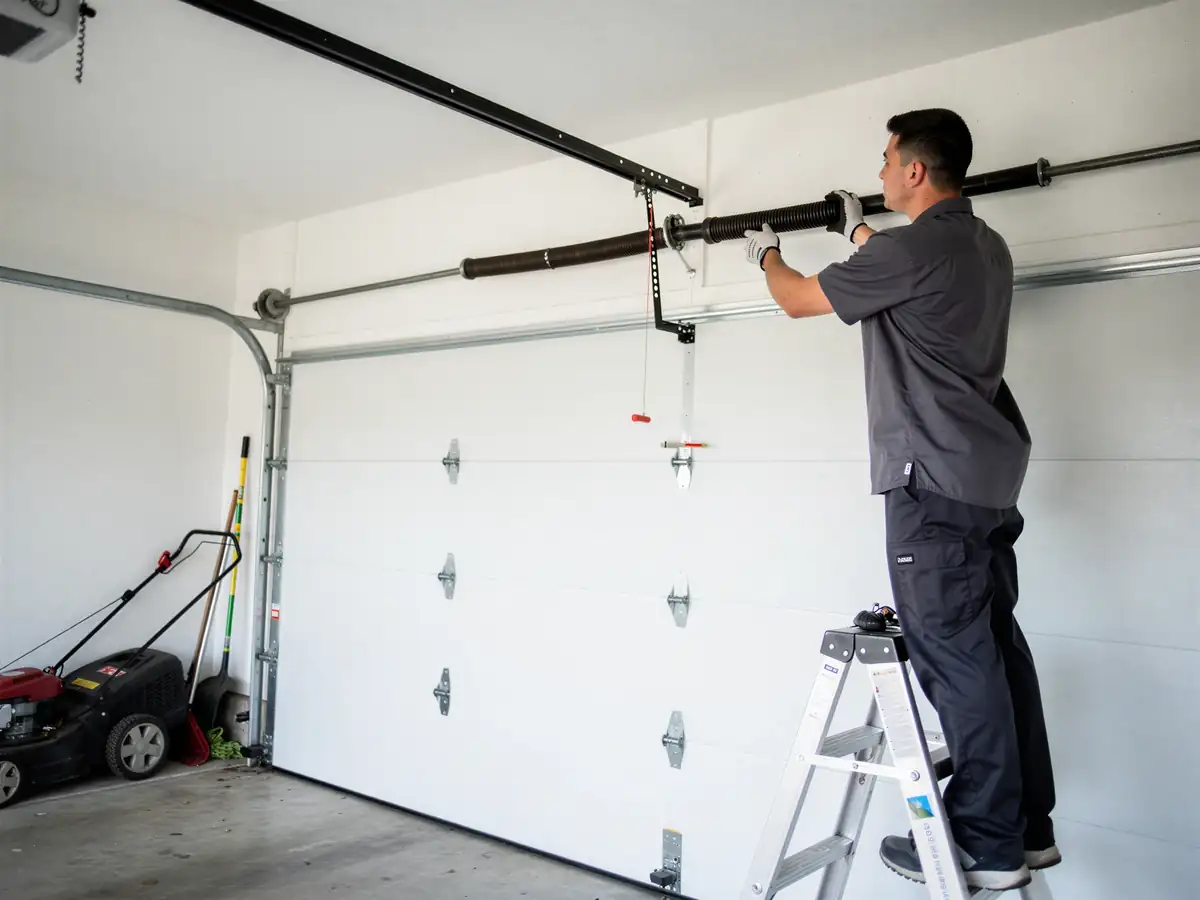
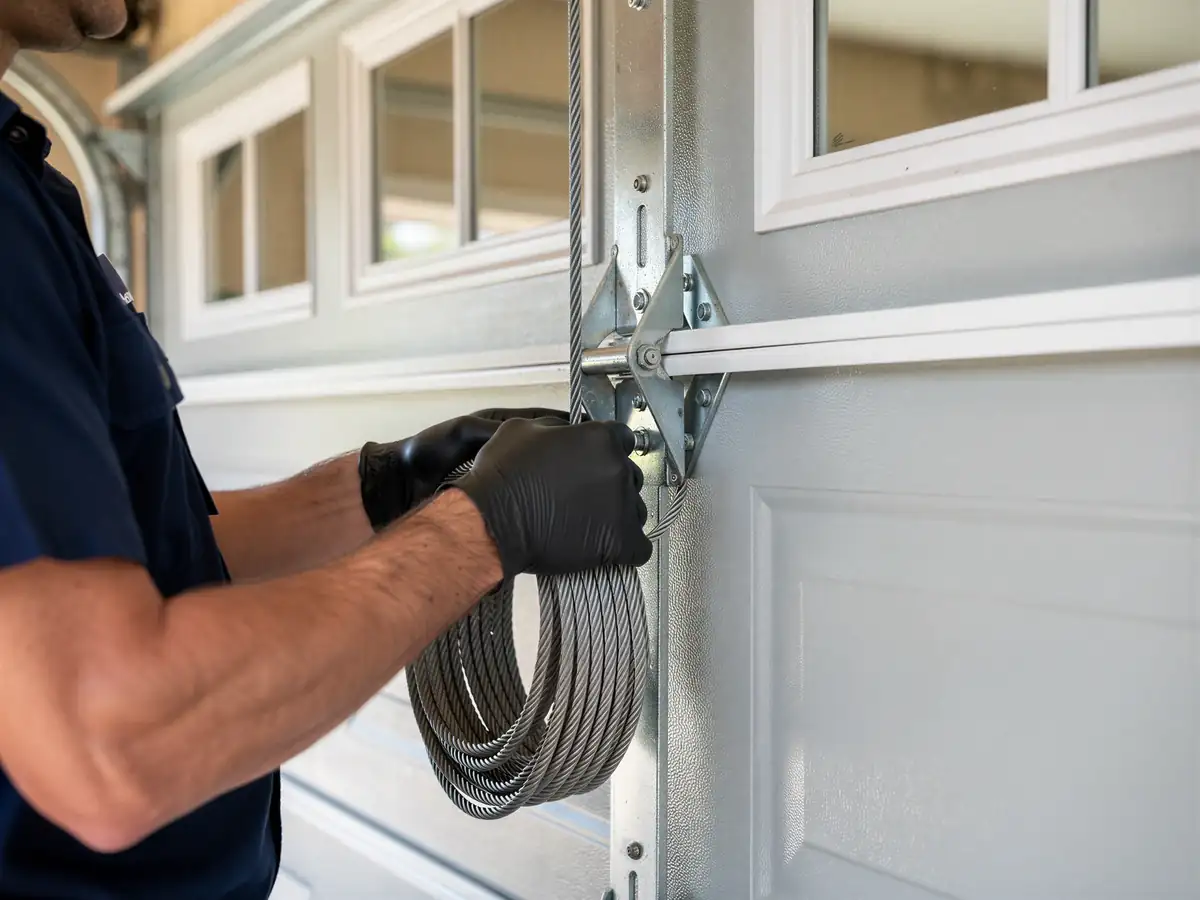
We don't quote a number here without seeing the door, and we're not going to post a price range that doesn't match what you'll actually pay. What we can tell you is what drives the cost on a Town and Country job specifically: most of the houses we're called to here were built around 1984, so you're looking at steel sectional doors on torsion spring systems rather than the older extension-spring setups common in 1960s construction closer to Ballwin. Torsion repairs and replacements run differently than extension work, both in parts and labor, because the hardware sits on a different shaft arrangement above the door.
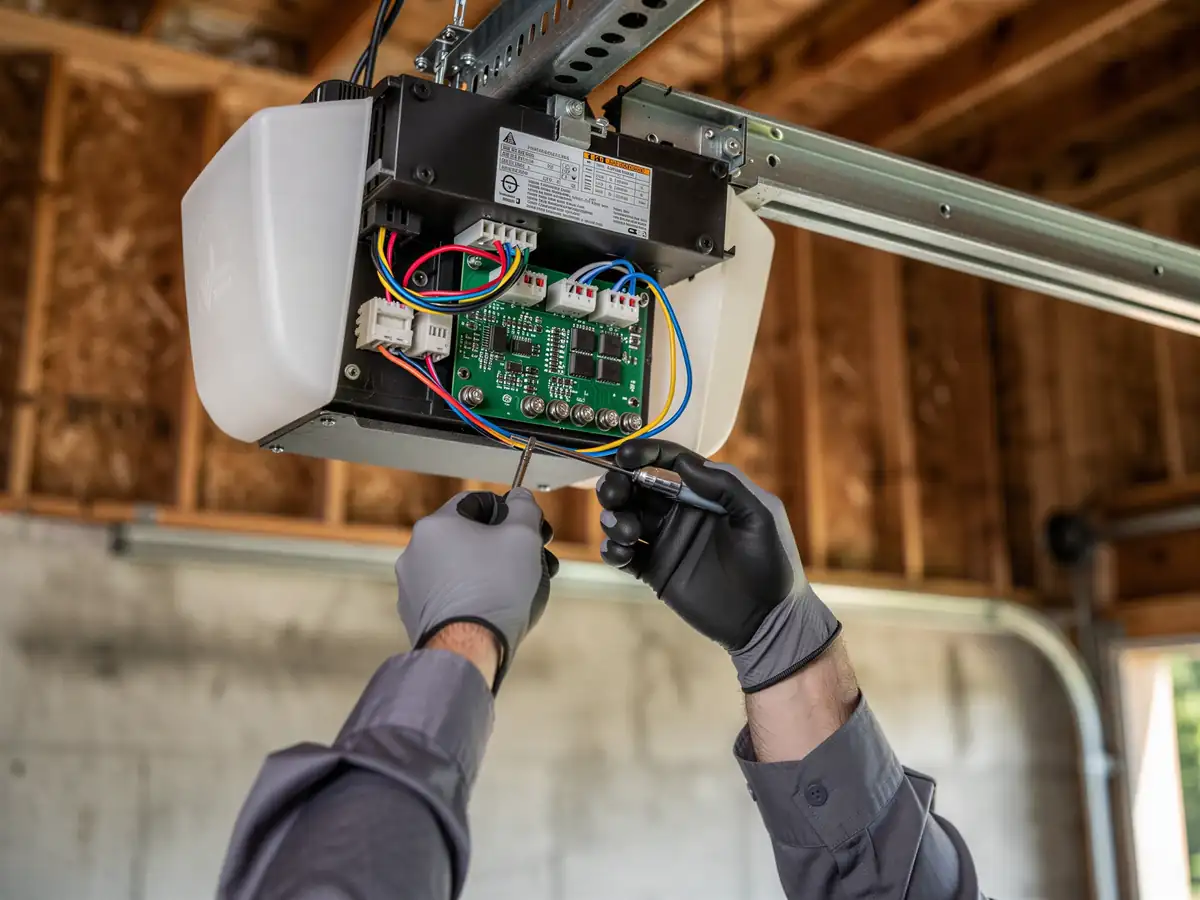
The other variable is the opener. A door built in 1984 often still has its original chain-drive opener, or a replacement from the 1990s. Circuit boards and gear sets at that age are usually the real cost driver, not the door panel itself. We price the job once we know whether we're dealing with a spring, a cable, or a dying opener logic board - those are three different repairs with three different parts lists, and lumping them into one number would be a guess, not a quote.
Stocked Parts
Because Town and Country's housing stock centers on the mid-1980s
Our truck carries torsion springs sized for the steel sectional doors that went in during that build-out, along with the standard roller and cable sizes that match. We also carry belt-drive opener components, since a household income here that runs well above the regional median tends to come with upgraded belt-drive units and keypad entry rather than the older chain-drive boxes you'll find in older construction.
What we don't stock on the truck is anything specific to a custom or architectural door
Those get special-ordered, and we'll tell you up front if that's what you're dealing with rather than make you wait at the curb while we guess. For the standard torsion and opener hardware that matches 1980s-era construction, we're usually working from what's already on the truck when we make the five-mile drive out from Ballwin.
Doing It Yourself
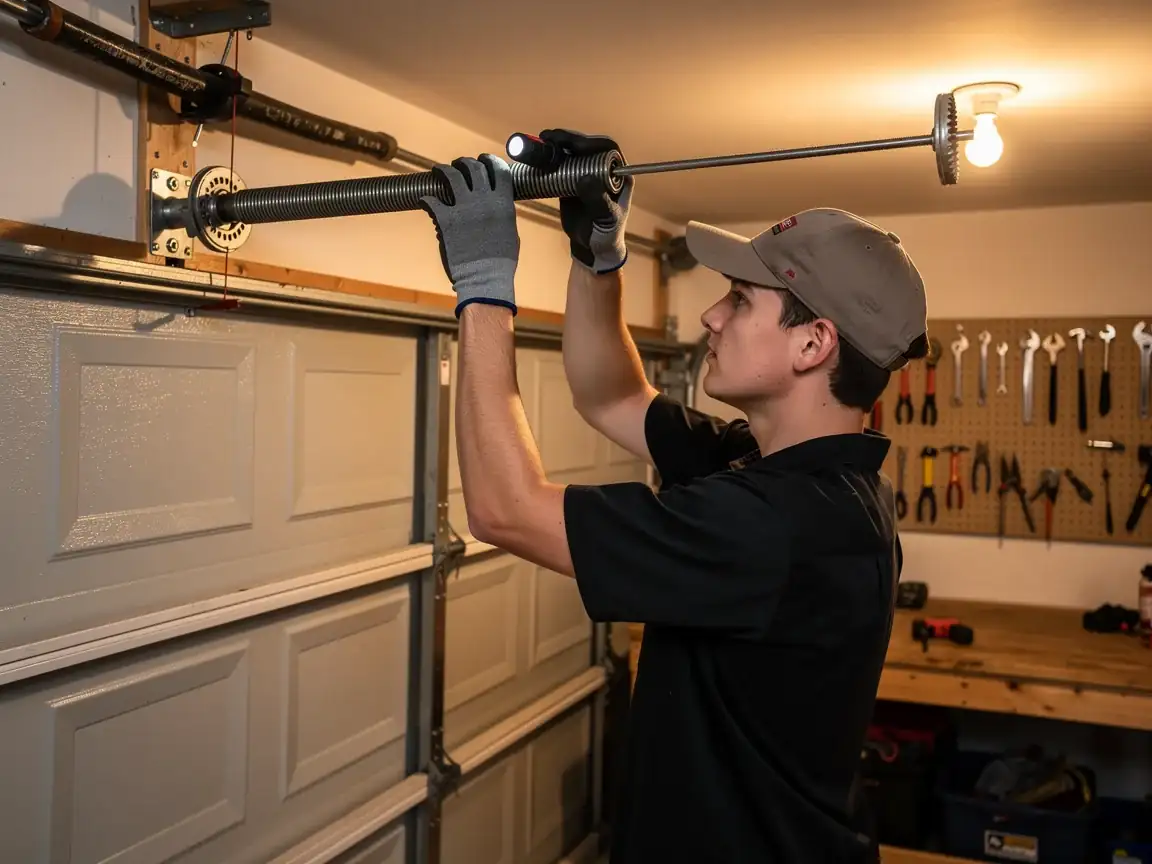
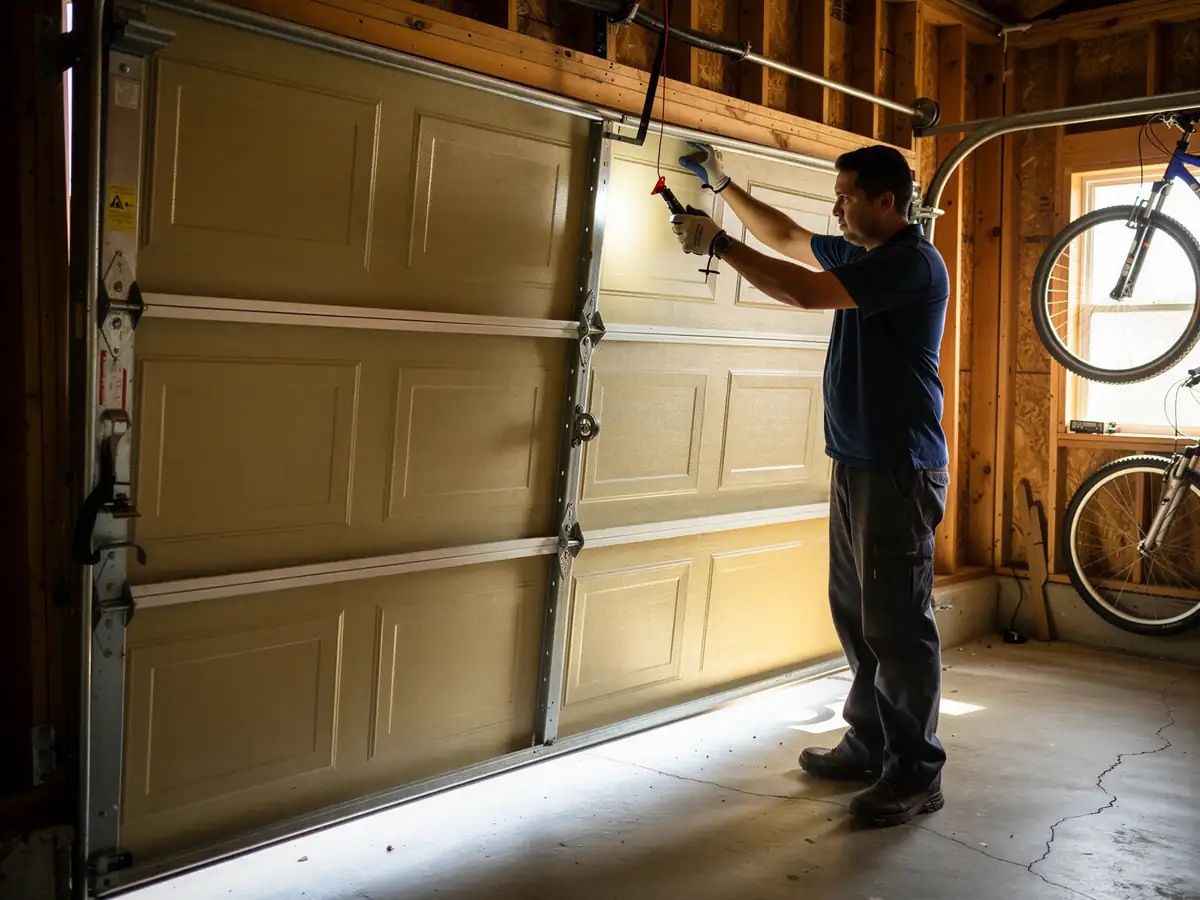
A torsion spring under tension is not a weekend project, and that's true whether the house went up in 1969 or 1984. If your door won't open and you can see the spring is broken or stretched, the safe move is to leave the door down and call - the spring is storing enough force to cause real injury if it lets go while you're working near it.
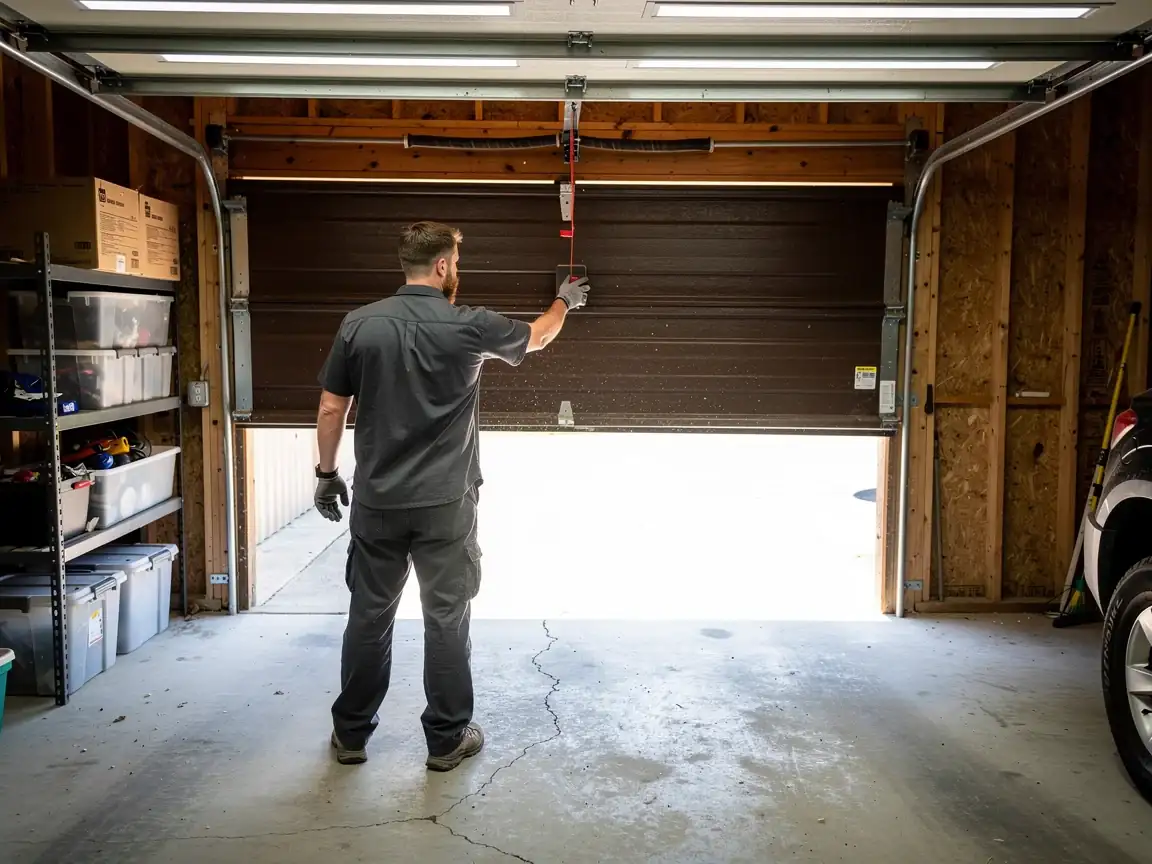
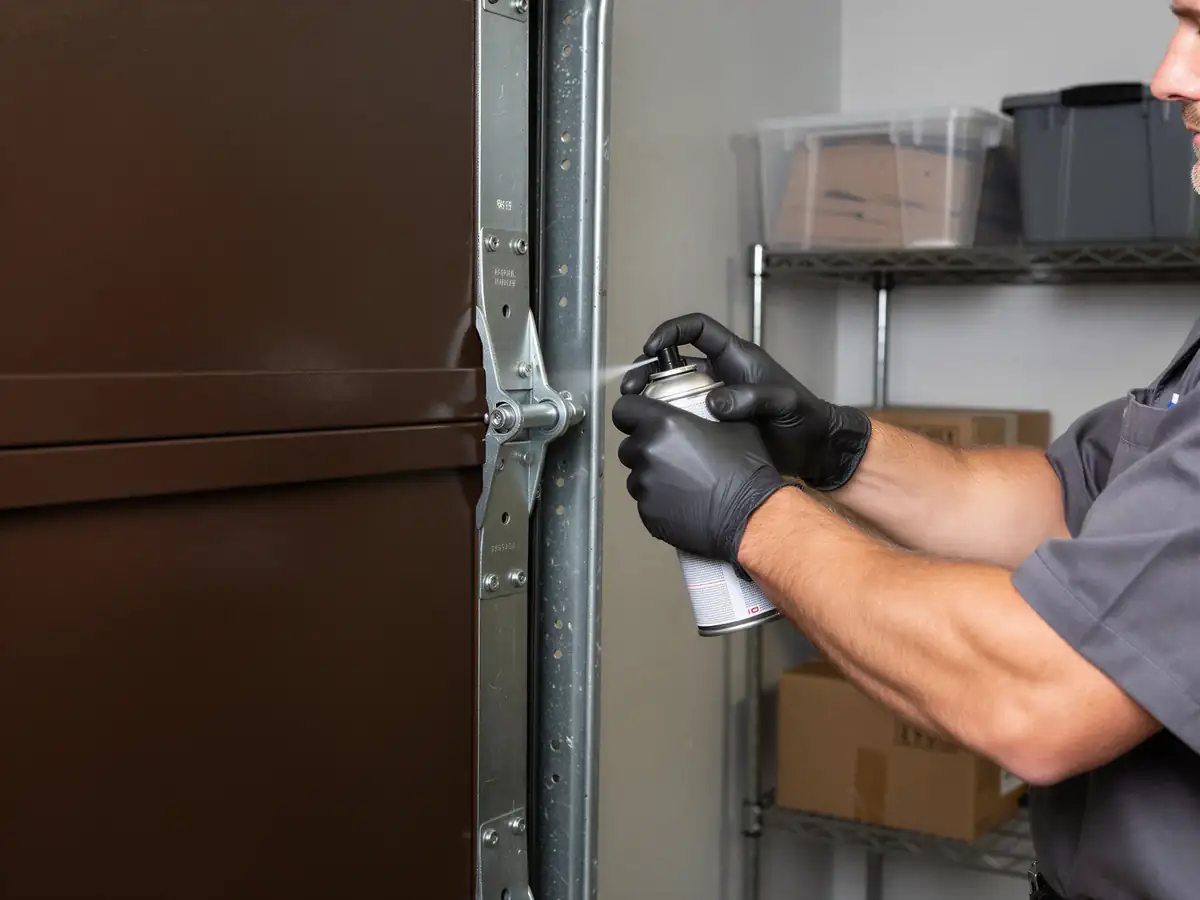
What you can reasonably check yourself: the photo-eye sensors near the floor track (a lot of no-close complaints trace back to these being knocked out of alignment or blocked by something on the garage floor), and the opener's wall button wiring if the door won't respond at all. Lubricating rollers and hinges with a garage-door-specific lubricant is also fine to do on your own and extends the life of the hardware.
Our honest limitation: we don't do cosmetic panel matching on discontinued door lines. If a single panel on an older door is dented and the manufacturer no longer makes that exact profile, we'll tell you that replacing the whole door is usually the better call rather than trying to chase down a part that doesn't exist anymore.
What Causes It Around Here
With most Town and Country construction dating to the mid-1980s, the openers we're pulling out of these garages are frequently original or close to it - meaning they're 35 to 40 years into a service life that was never meant to run that long. Gear sets wear down, capacitors in the logic board age out, and the result is an opener that runs the motor but the door doesn't move, or moves part way and reverses.
Cold winters add their own wear pattern on top of that. Steel sectional doors on torsion springs tense up in cold weather, and a spring that's already near the end of its cycle count is more likely to fail on a cold morning than a mild one. That's true of torsion hardware generally, but it matters more here because 1980s-era torsion springs installed when these houses were built are now old enough to be near or past their rated cycle count regardless of how well they've been maintained.
Where This Job Goes Sideways
The most common mistake we see on a Town and Country call is a DIY spring swap where the wrong size went in
Torsion springs are rated by wire diameter, coil length, and wind direction, and a spring that's close but not exact will either strain the opener trying to compensate or put uneven tension on the two sides of a double door. We end up replacing both springs anyway once that happens, which costs more than if the right pair had gone in the first time.
The second way it goes sideways is an opener replacement on a door that actually needed spring work
If the opener keeps burning out or stalling, swapping the opener fixes nothing if the real problem is a spring that's lost tension and is making the motor do the lifting it was never built to do. We check the spring before we touch the opener, every time, because replacing the wrong part means paying twice.
We make the five-mile run from Ballwin for these calls
And because the fix depends on figuring out which of these two parts actually failed, we'd rather take the extra few minutes on-site than guess from a phone description.