What Causes It Around Here
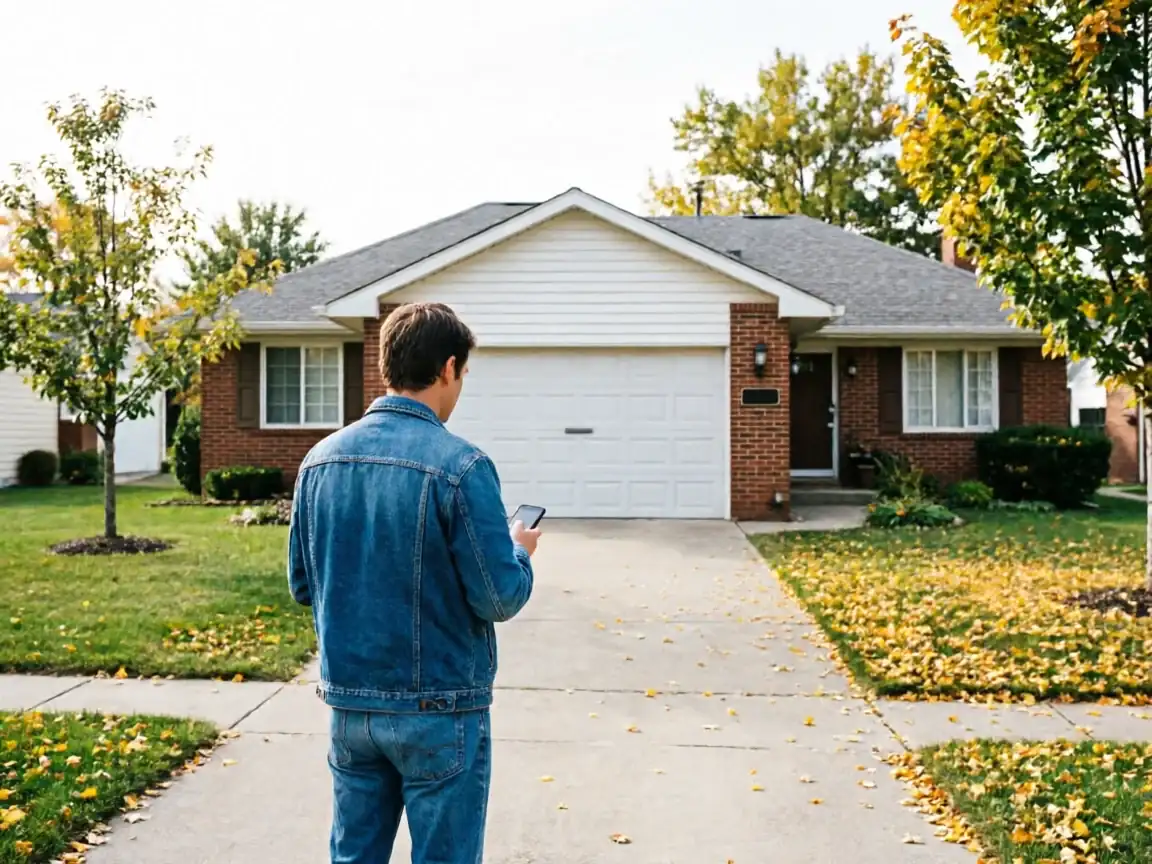
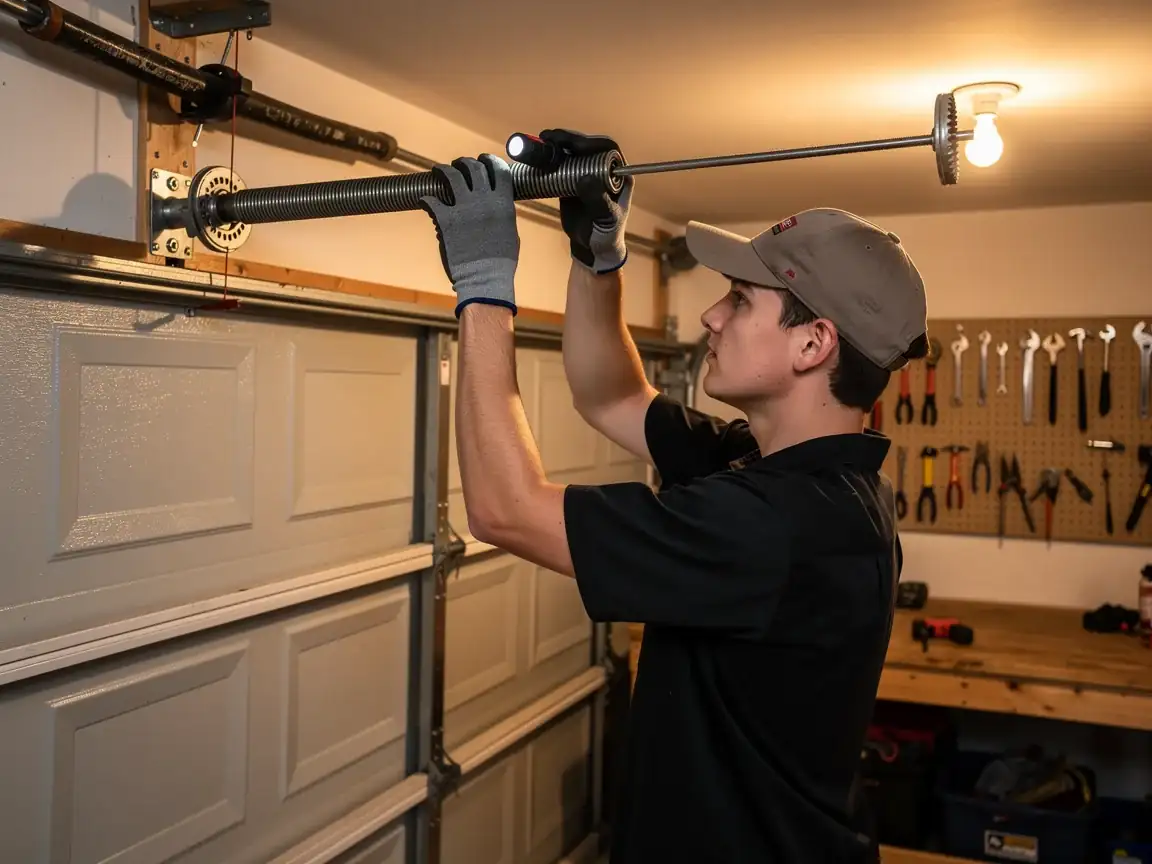
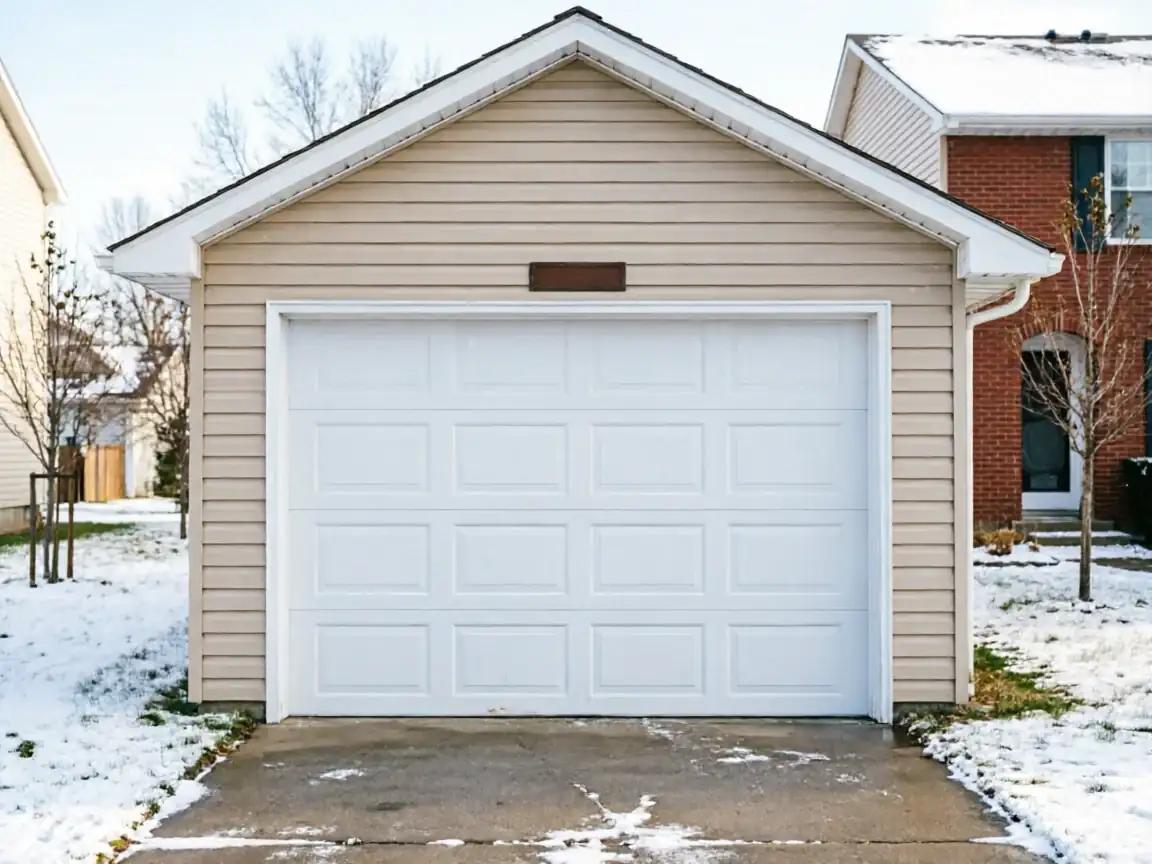
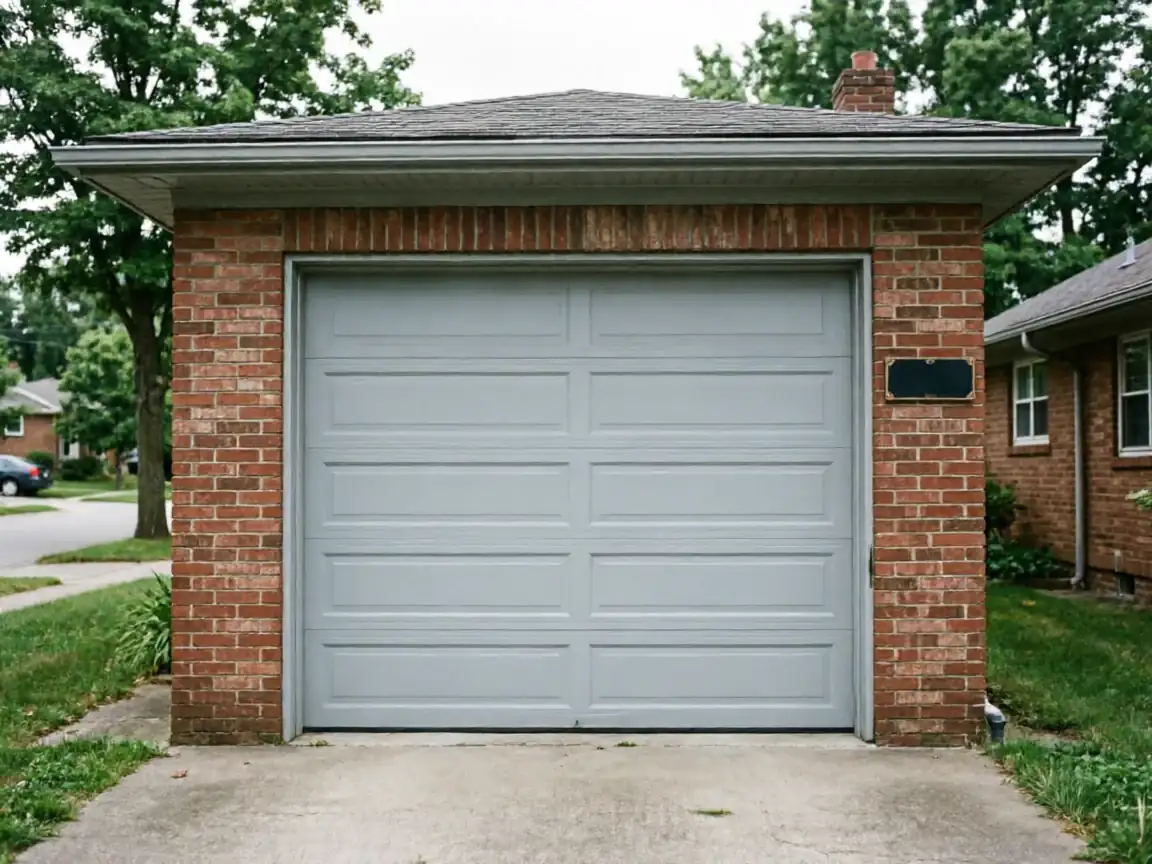
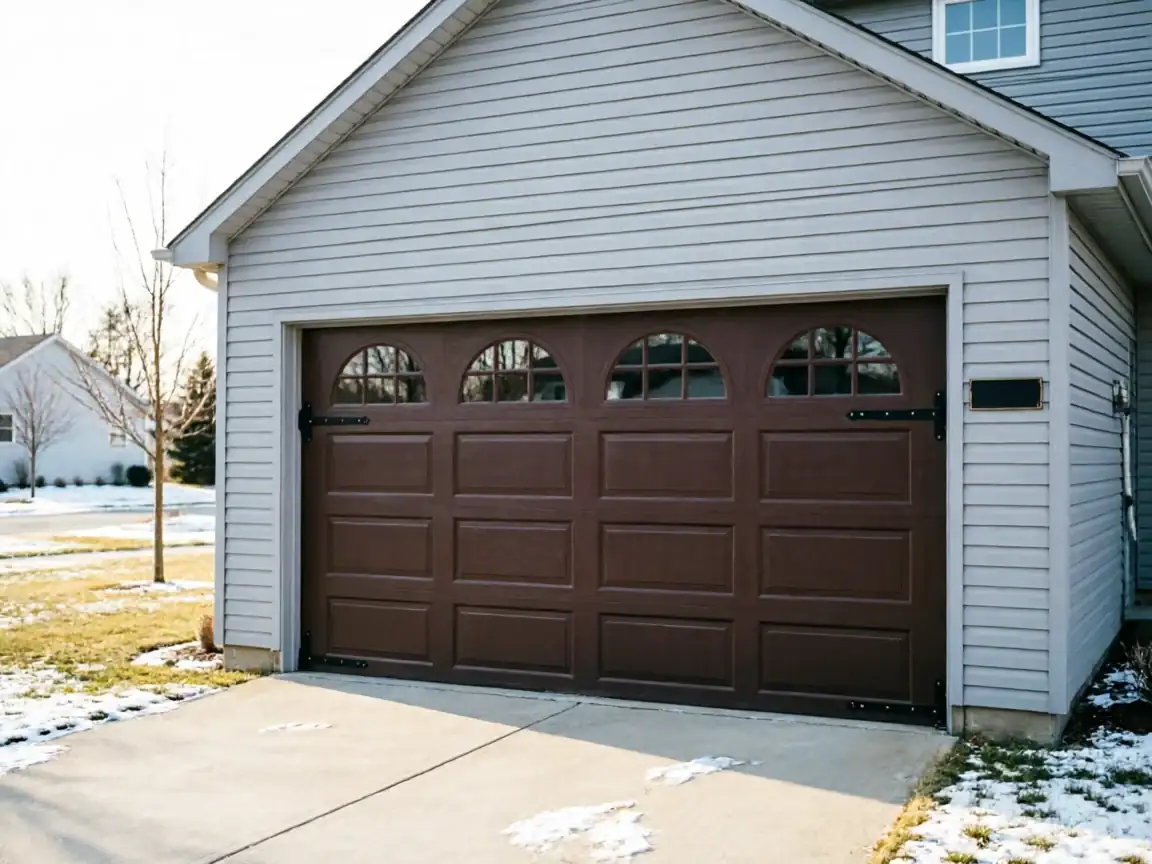
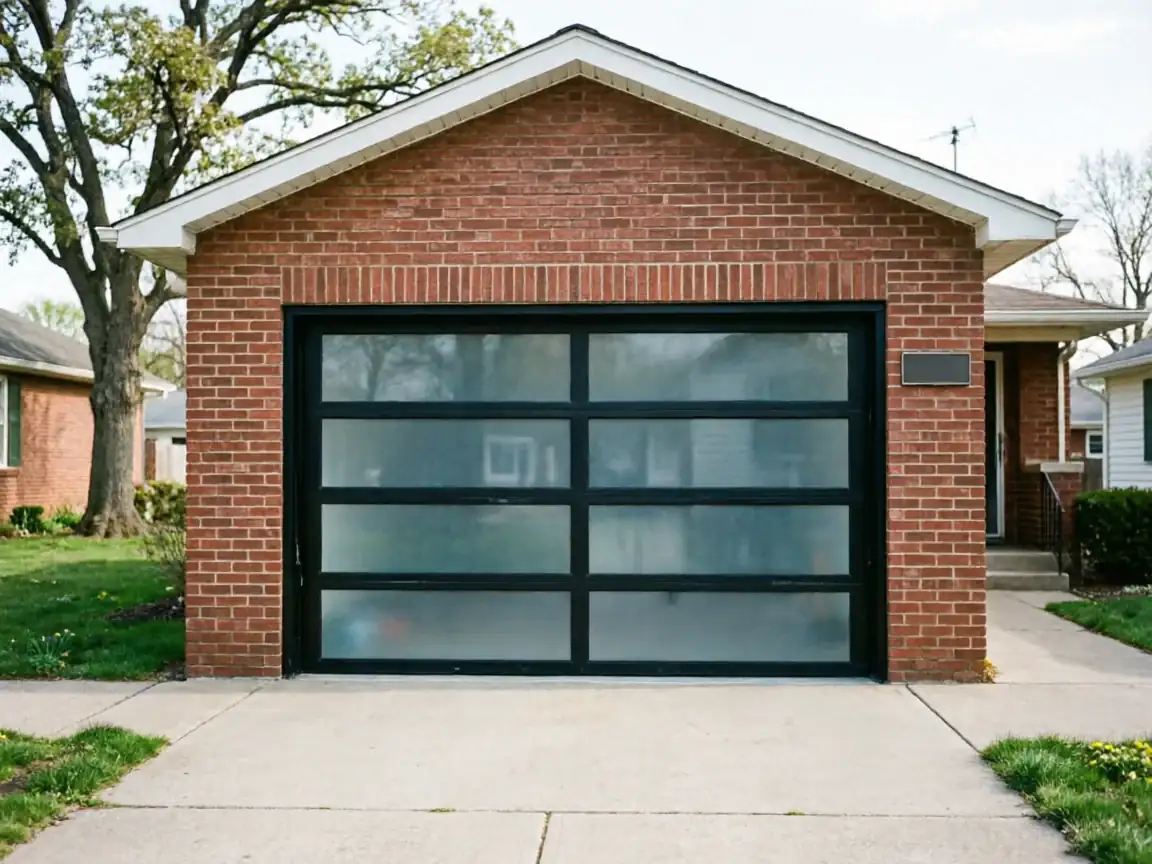
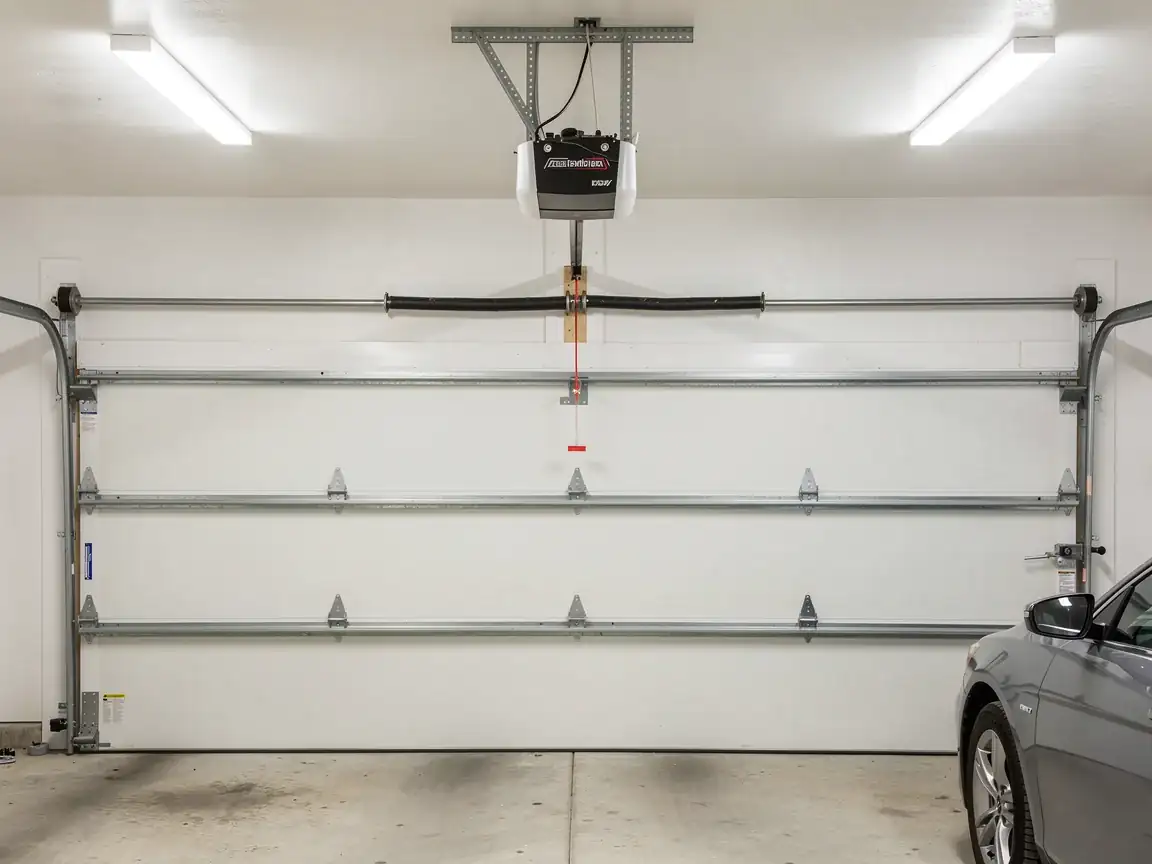
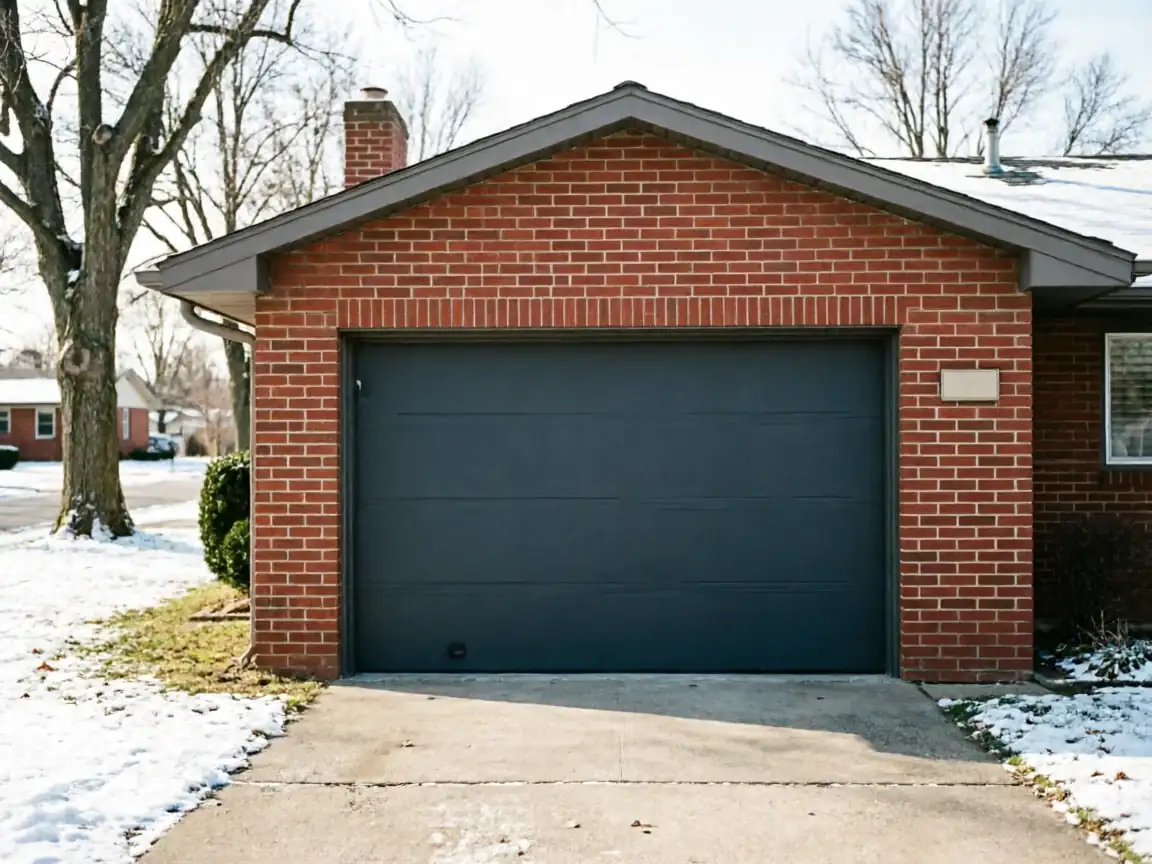
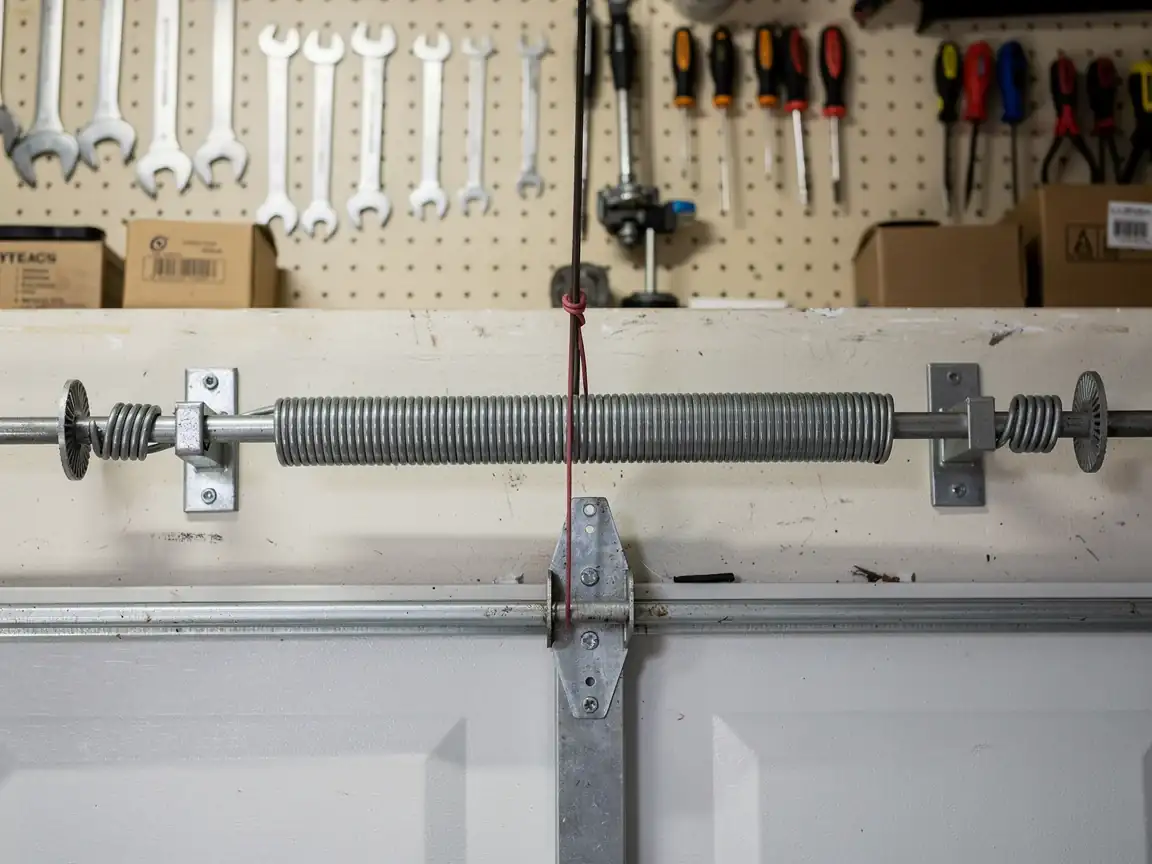
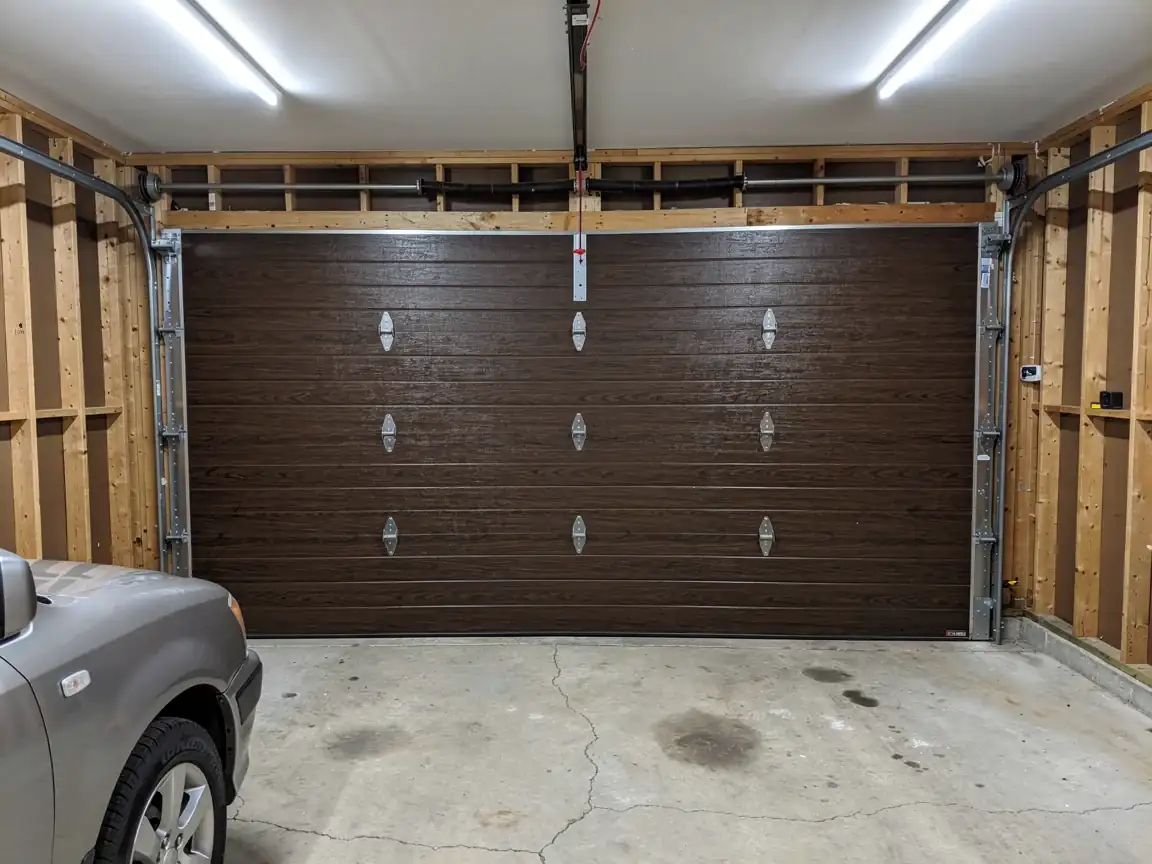
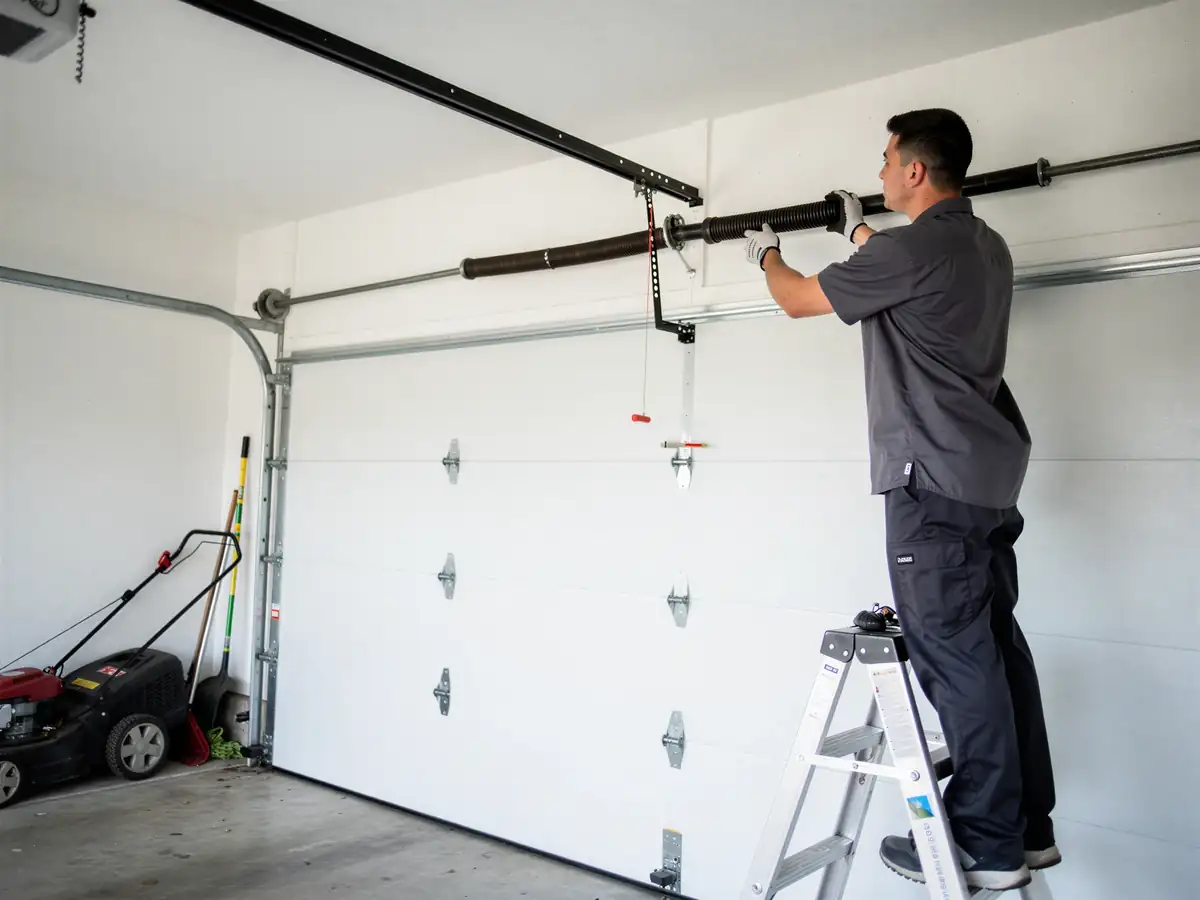
Most garages in Des Peres went up around 1975, a decade or so into the broader 1947-to-2011 building wave that filled in this whole side of the county. That puts the typical door here a step later than what you'd find in the oldest pockets nearby - steel sectional panels rather than the solid wood slab doors from the 1950s, usually on a 16-foot double opening rather than the narrower single-car bays common in earlier tracts. The steel is thinner-gauge than what's sold today, and a fair number of these doors still ride on the original galvanized track with extension springs stretched along the horizontal rail instead of a torsion bar over the opening. Extension springs lose tension gradually instead of snapping clean, so the symptom isn't usually a broken spring - it's a door that gets heavier to lift by hand every year and an opener motor that's been quietly doing more work than it was built for. Add in a median household income well above the regional figure (F7 covers the wider service area, not this suburb specifically), and what we see here tends to be doors that were well-built for their era but never had the track realigned or the springs re-tensioned as the house settled. Nobody notices until the opener starts straining or the door hangs crooked by half an inch.
What It Costs
We don't have a flat number to quote you here - door width, spring type, and how much the track has drifted out of plumb all move the price, and we're not going to invent a figure that doesn't hold up once we're standing in front of your door. What we can tell you is that extension-spring systems from this era generally run less to service than a torsion conversion, since we're adjusting existing hardware rather than replacing a spring bar. Given the home values typical of Des Peres, we also see more requests for insulated steel or wood-composite overlay doors during a maintenance visit, which is a separate quote from routine service. If your opener is straining because the springs are underpowered for the door's weight, re-tensioning is cheaper than it sounds, but a door with warped panels or a bent track usually costs more to patch than to plan for replacement.
What the Fix Involves
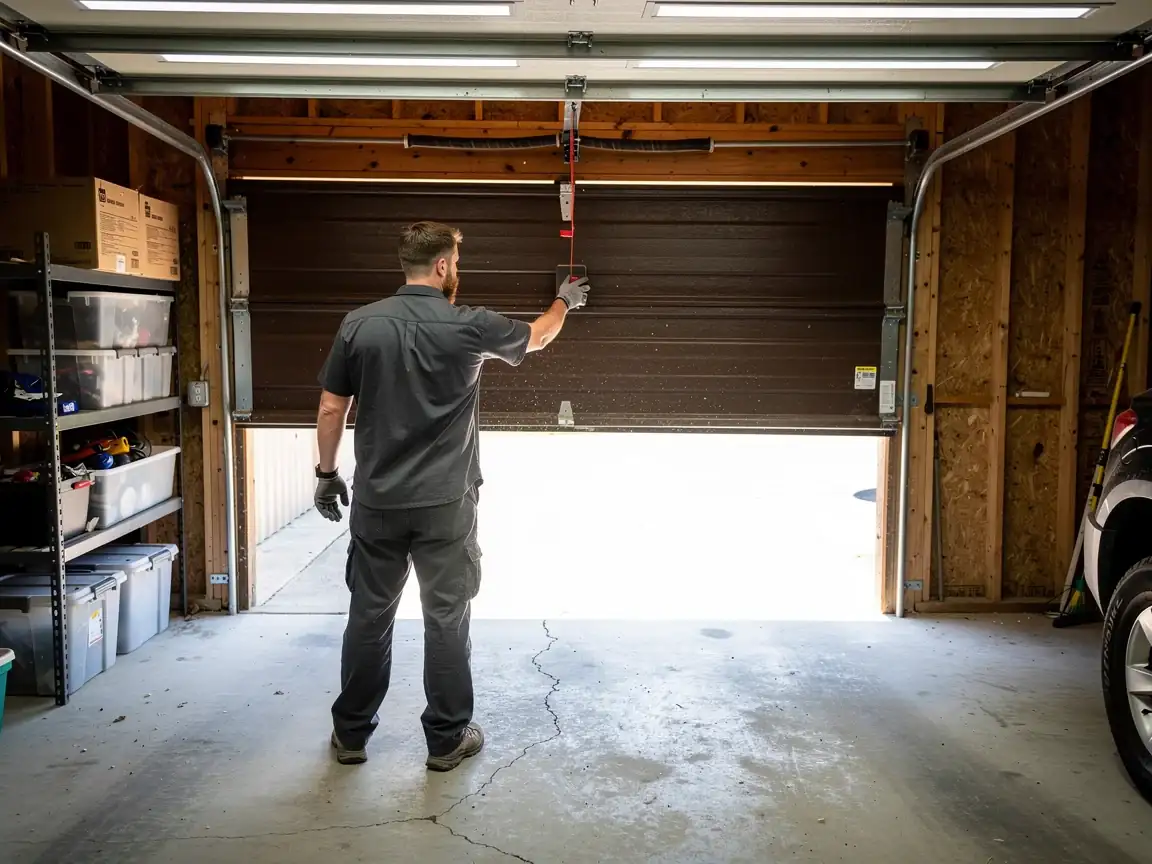
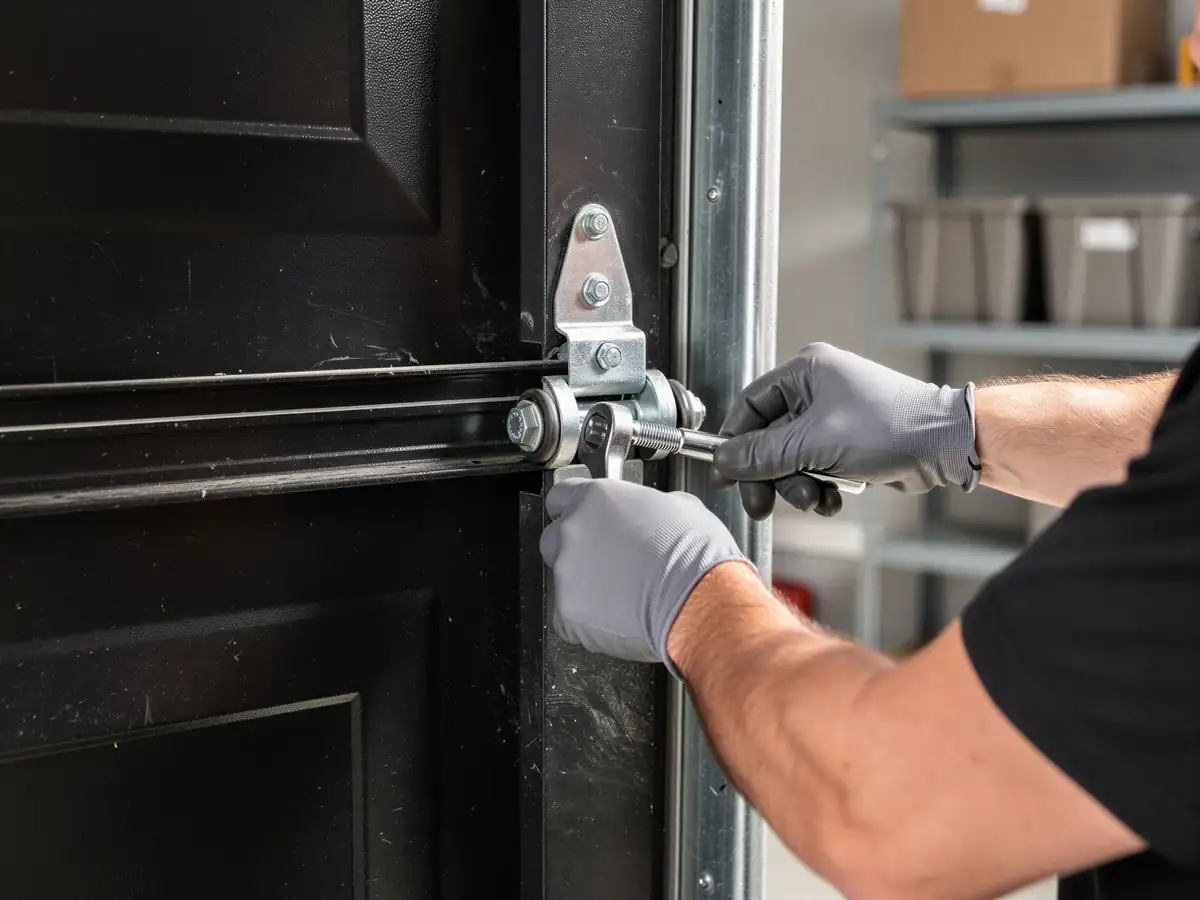
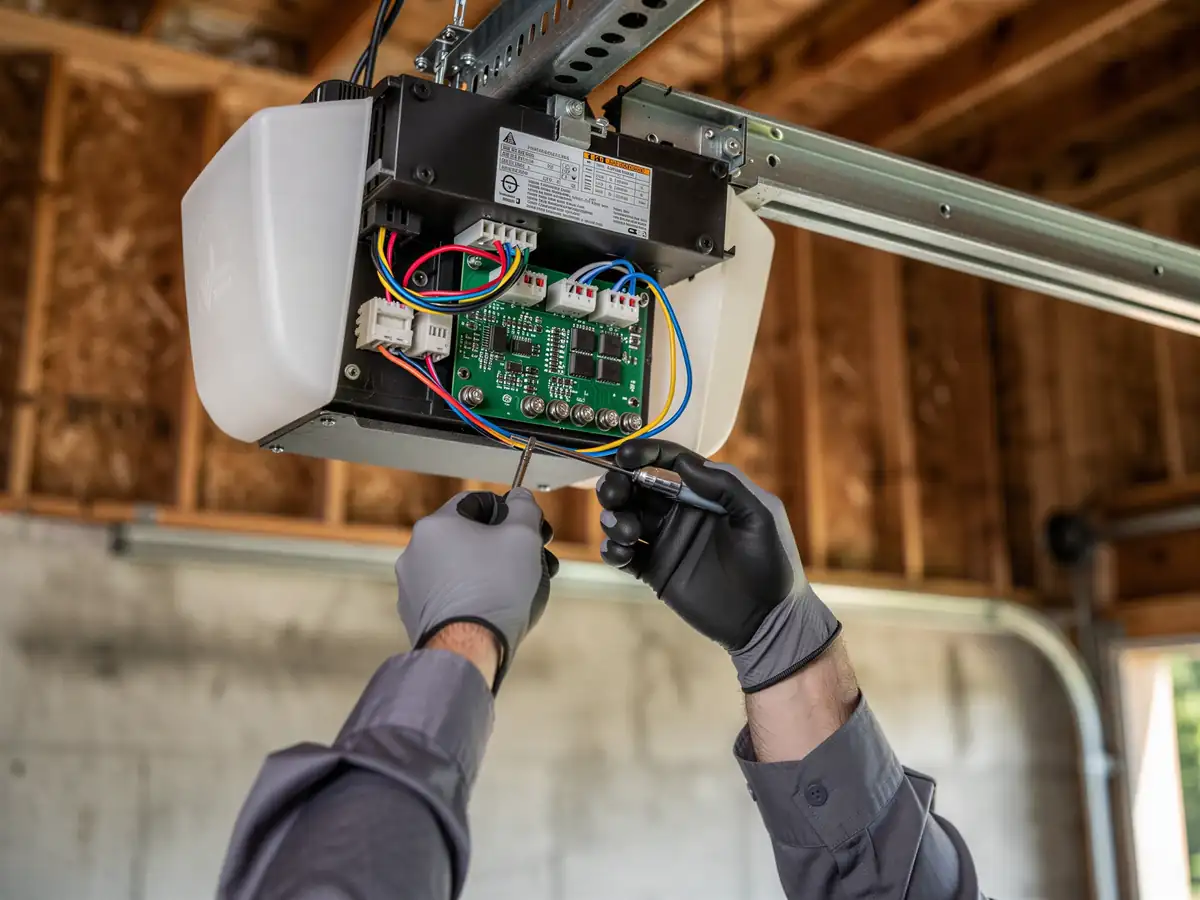
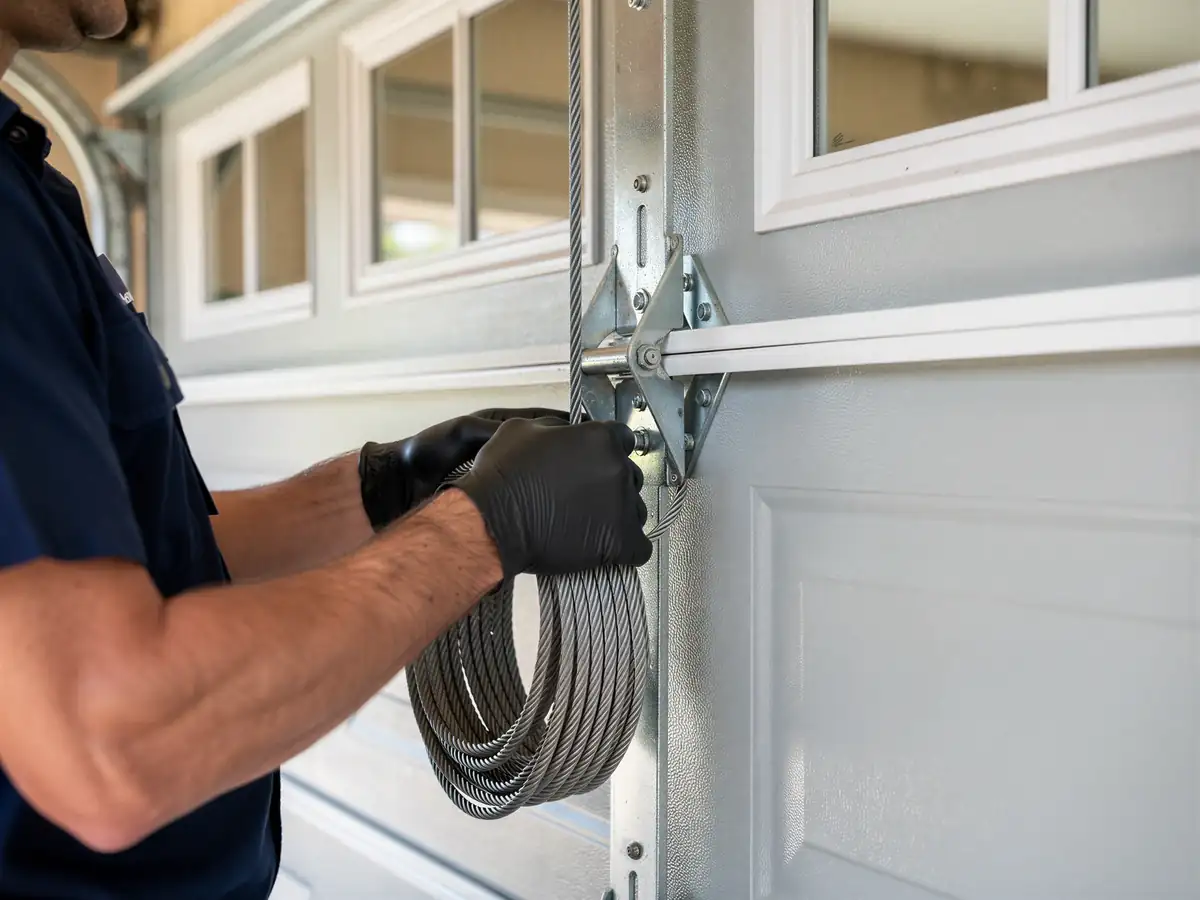
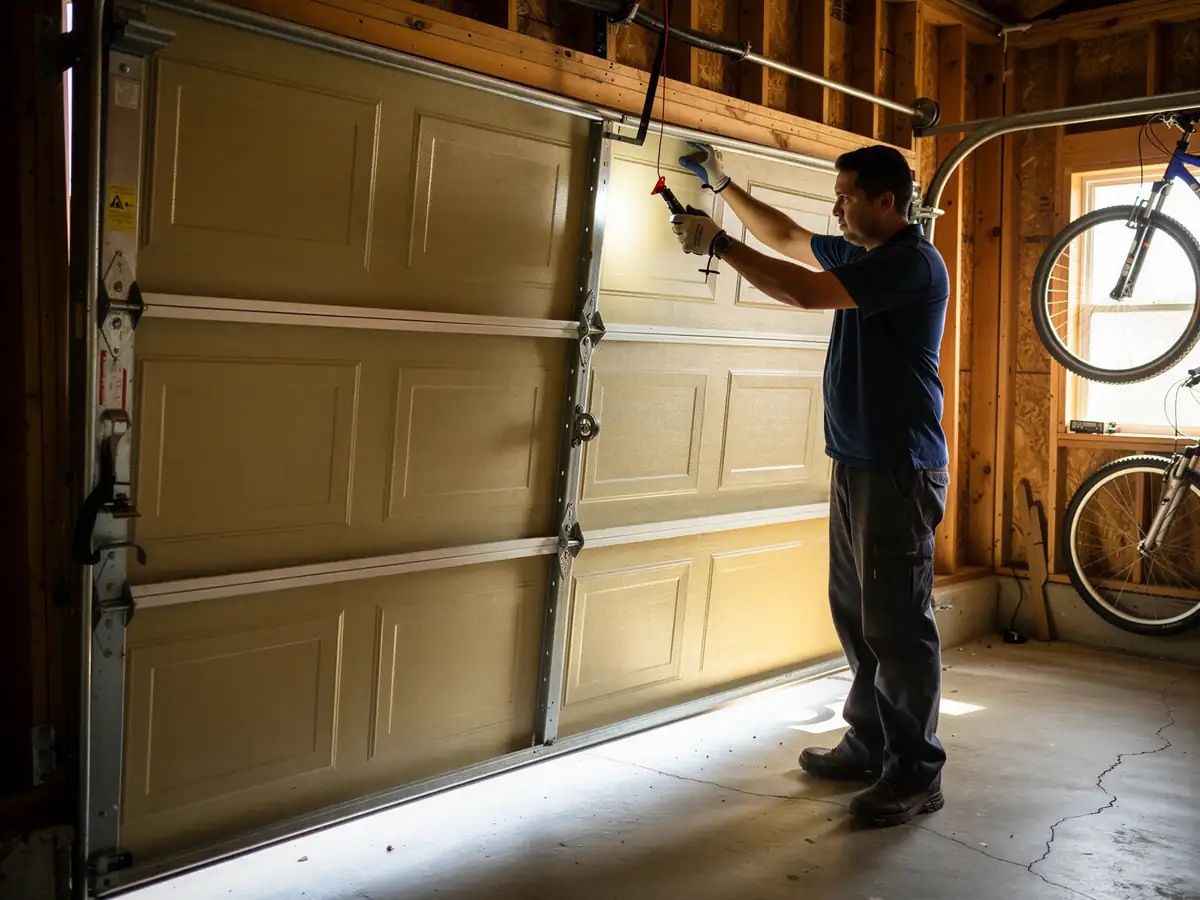
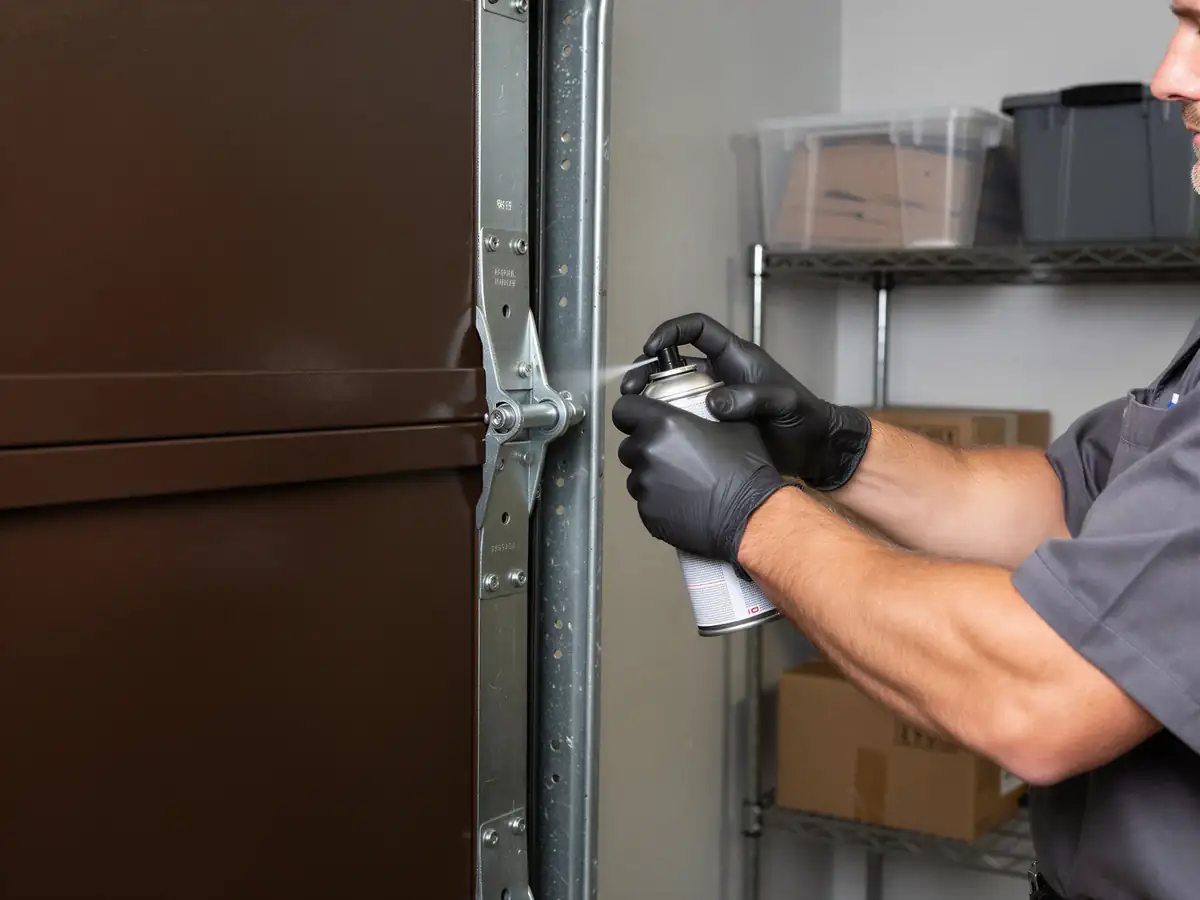
A maintenance visit on a 1975-build door starts with checking the track for plumb against the jamb, since 50 years of house settling moves that line more than owners expect. From there we check spring tension - on extension-spring setups, that means confirming both springs are stretching evenly and the safety cables are still routed through them, a detail that was optional code in 1975 and isn't optional now. We lubricate the rollers and hinges, check the bottom seal for cracking given the cold-season exposure, and test the opener's force and travel limits against the door's actual weight rather than whatever the installer set decades ago. If the panels show rust-through at the bottom section - common once the original factory coating wears thin - we'll flag it rather than just lube around it, because a weak bottom panel changes how the whole door should be balanced. We don't repaint or refinish panels as part of a maintenance call; that's a separate job.